This book is a contemporary novel in Spanish literature.
Thus, it can be classified within the narrative genre in the form of a novel and subclassified into categories such as magical realism and philosophical novel.
This is a first edition published by Los Libros del Gato Negro in 2021, an independent Spanish publishing house founded in Aragón in 2015. Its catalogue features fiction, poetry and other literary works, with a particular focus on contemporary authors and works of a unique nature. The publisher is committed to high-quality production and to raising the profile of voices seeking to carve out a space for themselves outside the major commercial circuits. This book has not been translated into English.
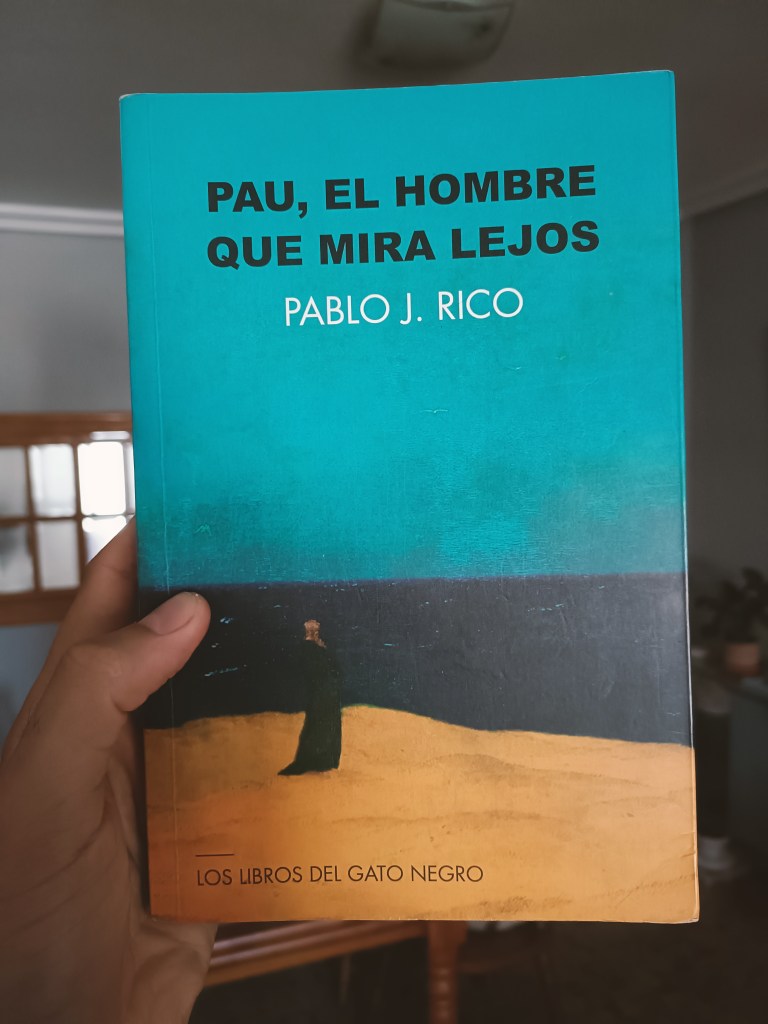
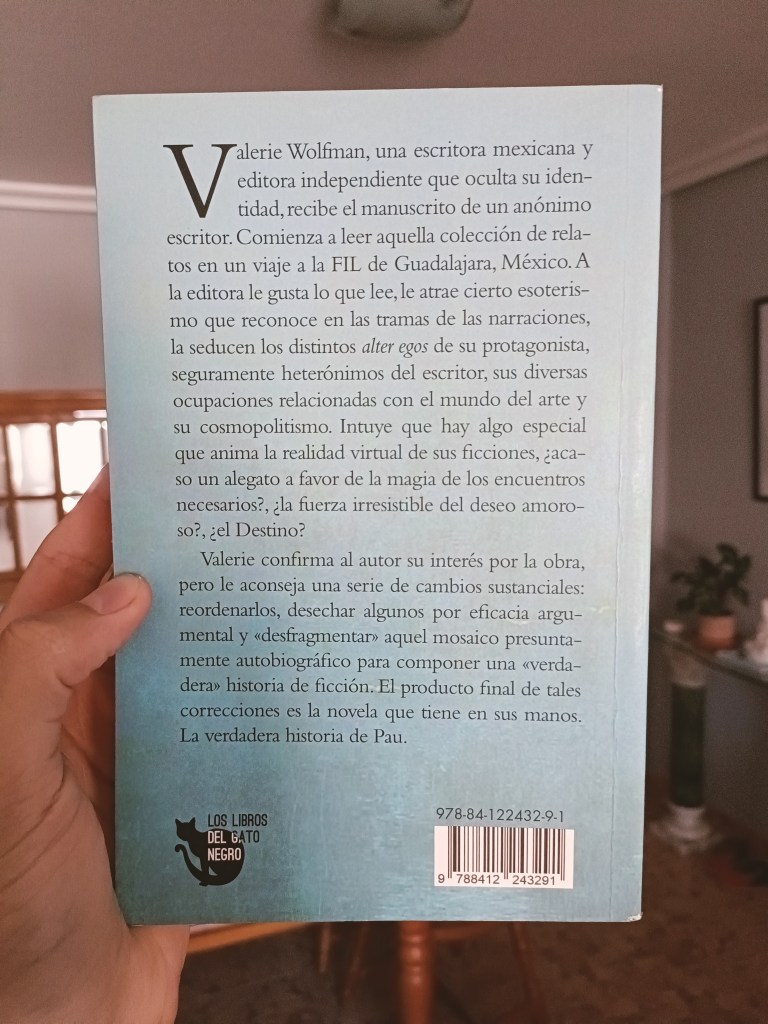
- Publication date: 2021
- Country: Spain
- Pages: 352
- Reading date: April 2023
- Rating: 2/5
The author is Pablo J. Rico (Zaragoza, Spain, 1955–), a Spanish writer, art historian and exhibition curator. He graduated with a degree in Philosophy and Arts from the University of Zaragoza, specialising in Modern and Contemporary History and Art History, and went on to further his training in education and the management of cultural institutions. Throughout his career, he has directed institutions such as the Pablo Gargallo Museum in Zaragoza and the Pilar and Joan Miró Foundation in Mallorca, as well as curating hundreds of exhibitions in numerous countries. His international experience and knowledge of art have profoundly influenced his writing. Following an extensive career as a historian, art critic and author of specialist publications, he made his debut as a novelist with Pau, the Man Who Gazes into the Distance, a work of autofiction which combines personal experiences, travel, art and literary imagination.
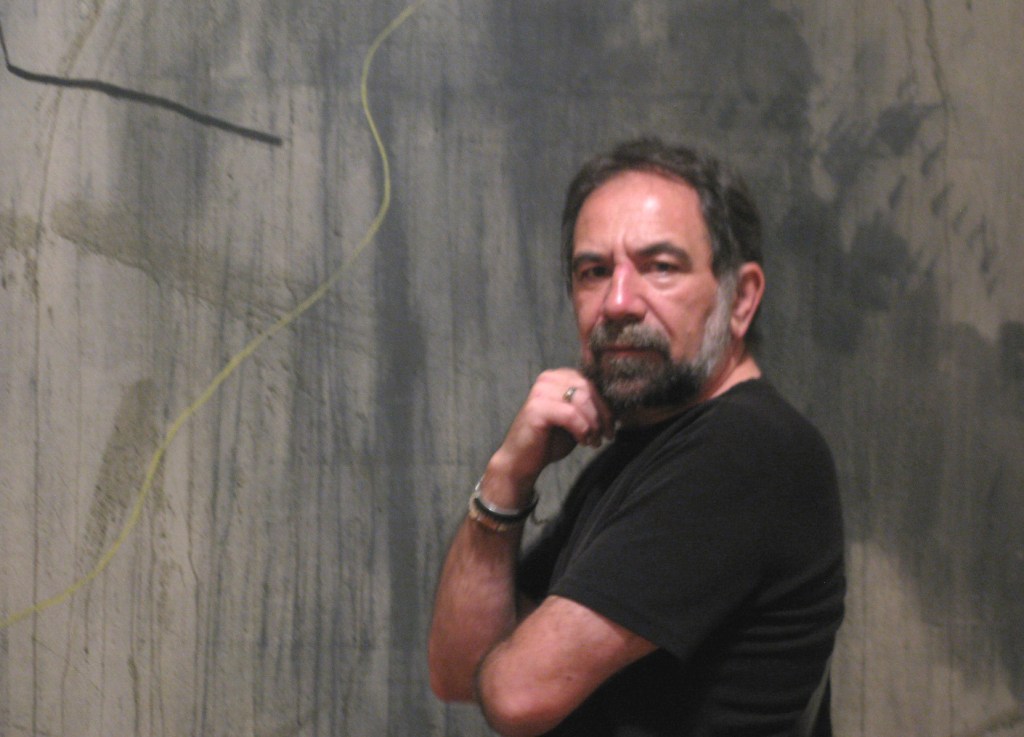
I came across this book by chance whilst living in Zaragoza in 2022. It was 23rd April, St George’s Day, and stalls set up by various publishers and bookshops had been erected on Paseo Independencia, selling books. Whilst out for a stroll, I bought this one. I must say that the author was a very good salesman and, with a touch of mystery and poetry, managed to persuade me to buy a copy.
«Yes, diabolical, as opposed to the ‘symbolic’ – that which enables us to weave meaning and create interpretations of what is apparently hidden or simply concealed. To fall into the ‘diabolical’ would be like a condemnation to the madness of meaninglessness, to the loss of language as an instrument of knowledge, expression, communication, the debate of ideas and consensus; the loss of perspectives and the future – in other words, chaos, war, fanaticism…».
Pau
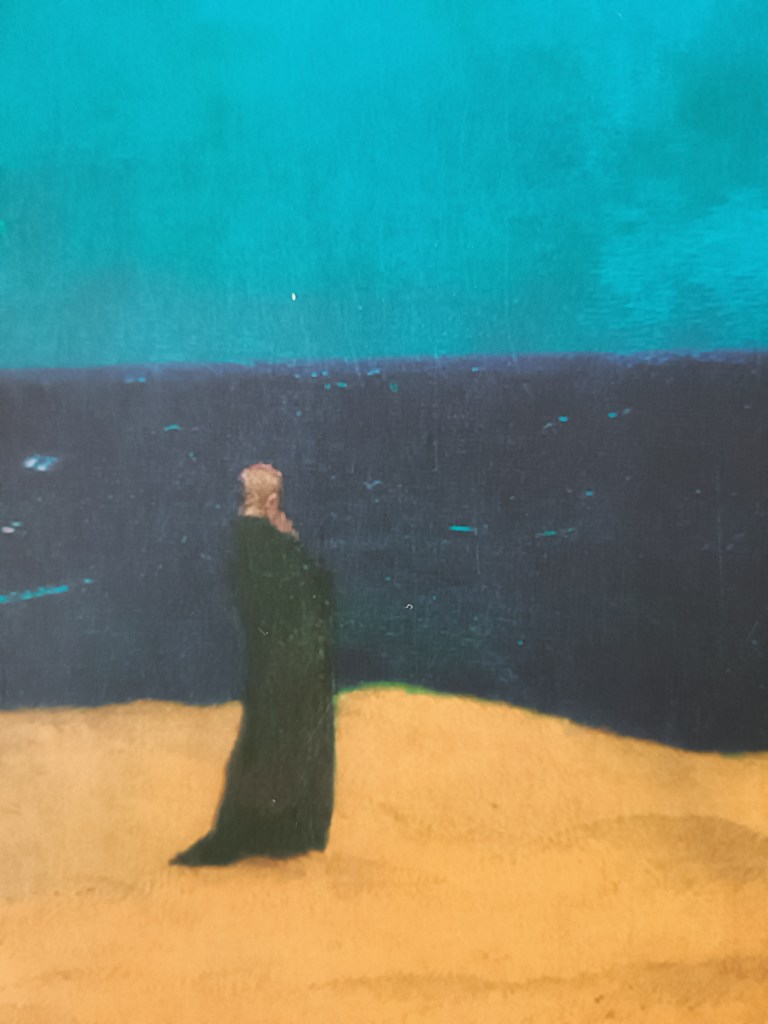
The plot of the novel begins when Valerie Wolfman, a Mexican writer and editor, receives an anonymous manuscript entitled A Fragmented History of Pablo Llanes and Other Paulinian Tales. Upon reading it, she discovers a collection of stories that blend personal experiences, unexpected events, philosophical reflections and mystery. The work revolves around Pau, Pablo or Paul, who are different identities of the same protagonist linked to the art world. He has experiences across multiple countries, has various romantic relationships and meets people who shape his understanding of reality; through his interactions with them, he finds himself in situations which make him question the meaning of existence. Valerie herself, after reading the manuscript, in an attempt to give it coherence, reorganises its parts to turn it into a work of fiction, and the book itself is the result.
«I irrationally maintain that beings and things are subject to the power and whims of Fate. It is Fate, or ‘ontological chance’—call it what you will—that expresses itself with absolute eloquence in this natural unfolding of the events that constitute our existence. The world has never been inert, formless or merely causal; otherwise, it would be something meekly equidistant, and nothing and no one would be of any decisive importance. So why do we ever come across any unprecedented wonders? How do we recognise them? I believe in a world marvellously linked by an unceasing succession of metamorphoses that fascinate us, not by mere cycles of scientific causes and statistically predictable effects. Life always surprises us with its unexpected and unforeseen events. The uncertain nature of their appearance and encounter is also the enigma of their disappearance and parting – death or estrangement, who knows. There are things that happen to us without us having wanted them, and yet they happen. That dizzying whirl of people and things appearing and disappearing with astonishing speed in our lives is what renders our feeble attempts at rational understanding futile; it is what unsettles and seduces us at the same time. We spend our time inventing causes to ward off our inability to sense the natural flow of the universe. Forms and appearances are nothing more than the pure manifestation of an absolute necessity: that of coming together to change the world — for what else, if not that? — and so any attempt at a rational explanation or justification in the name of mathematics is superfluous. Everything is moving very quickly; we must remain alert, not distracted in the slightest, lest any of the wonders that Destiny has jealously guarded for us pass us by unnoticed. Life flows at the speed of light-years per second; writing, too, moves faster than the assembly of concepts and the grasping of meanings. We write as we live, we live as we write—in any case, bewildered as much by the sudden appearance of certain words or specific events as by their singular eloquence. It is these words that we immediately make the very heart and centre of our literature; things which, however commonplace they may seem at first glance, we sense will be unrepeatable merely by catching a glimpse of their spark… Don’t tell me you don’t believe in this magic? Yes, magic: something random and unpredictable by nature… Your stories, your narrative, are full of such ‘magical revelations’. There are so many words, so many ordinary things and situations in his stories that resonate with me—they’re like a snap of the fingers right by my temples! If only you knew…».
Pablo
The novel’s narrative is in itself a subject for reflection, as the book offers an unconventional literary experience by weaving together interlinked stories, playing with identities, perspectives and narrative forms, which helps the reader to view the protagonist’s personality from different angles and to question the boundary between reality and fiction. Furthermore, the author’s own professional background in the art world is palpable, with numerous references that allow art to be linked to human experiences.
The work invites reflection on universal issues by addressing philosophical themes such as identity, destiny, desire, love, chance and the meaning of existence… Furthermore, it is noteworthy how the theme of unexpected encounters plays a fundamental role, as it is these that cause the protagonist to alter his course and his interpretation of reality.
As for the writing style, it is meticulous, featuring numerous detailed descriptions and a rich blend of narrative and reflection. The aesthetic dimension of the settings and the characters features prominently.
«Human beings need symbols to penetrate the realm of the hidden, of the ineffable mysteries, which they could otherwise neither traverse nor follow in their winding, invisible wake. Symbols are like fireflies on a moonless night at the bottom of a canyon with impregnable walls and a bed of jagged icebergs. These magical insects do not fully light the way, but we recognise its limits: the vertical abysses dotted with those tiny, expectant flying stars; the vastness of the void that contains and defines us. Beyond the initial ecstasy at the poetic vision of the fireflies-as-symbols, we begin to glimpse other wonders even with our eyes closed, blindfolded, or blinded—it amounts to the same thing. They are muted lights, of the same substance as darkness, yet more subtle».
Paul
When it comes to discussing the aspects of the book that I find challenging, I realise that often the very elements we value most in a work can be the same ones that make it difficult for us to enjoy the story. Whilst I have appreciated how the novel combines different narratives with a high degree of experimentation with perspectives, I sometimes found this too fragmented, as it gave me a sense of disarray and I lost the thread of the story. One could say that at times I felt the desire for literary experimentation took precedence over the plot. And at certain moments, this drive for experimentation struck me as verging on pedantry, at the expense of the story’s cohesion.
On the other hand, the author is a cultured man, a professional in the art world. This is very interesting in his philosophical reflections and in the presence of the aesthetic dimension. However, I feel that he sometimes overuses cultural references, which makes it difficult to follow certain passages of the narrative.
«So, what is the purpose of labyrinths? Why are they invented? Why are they built? Simply to attract the attention of the unwary? To take refuge within them or to hide a treasure inside? What is the purpose of labyrinthine books, apart from the pleasure of writing them and constructing them like literary architects, and imagining the success of our traps…? I believe that, generally speaking, literary labyrinths serve to attract the attention of the curious—whether they be brave or unwary—specifically that sort of mystery-seeker who hopes for answers that are jealously guarded, hidden and secret, and who are not content with the comfort of their conventional certainties; in other words, those who are beguiled by the invisible. Literary labyrinths, like those in art—a painting, for example—are artefacts that first, in some way, satisfy the imagination and expectations of their victims; they stimulate their desires and grant them a kind of hope amidst the anguish of their despair. A writer or a painter does not create such artefacts to take refuge in them, but rather to display them before the eyes of others and draw their attention away from the undifferentiated mass of the ordinary, the conventional and the everyday. One of the absolutely essential qualities in an artist is their ability to captivate the gaze of others, as a skilled craftsman of seductive artefacts that catch the eye of their readers or viewers and draw them in. But mere attraction to the glitter of the surface is not enough—that sort of sudden, fragile, fleeting hypnosis employed by the fairground magician and the con artist of sensations. The artist must draw the curious and yearning spectator into the depths of their labyrinth with a certain ineffable light that dazzles them. Only then will their strategy and the pleasure of concealing what they intend to reveal—or, conversely, of making one believe that something is hidden deeper than what is seen, to the point of making one believe in the invisible—be fulfilled… Patricia, do not forget that every ideal author requires an ideal reader, and vice versa, as Umberto Eco pointed out; and that Duchamp said that paintings are also made by the onlookers».
Pau
I also experienced the fragmentation mentioned above in my emotional connection with the protagonist. I think it is more of a novel intended to provoke philosophical reflection and serve as a literary experiment than one designed to help the reader connect with the characters. The presence of the protagonist’s different identities and perspectives, whilst enriching his characterisation, also created a sense of distance. I found it difficult to connect with a protagonist who had so many versions of himself, although I was aware that this was part of the literary experiment.
«Artists and poets know full well that creative intuition and imagination, alongside their experience of daring to challenge the unknown, are what truly bring their works to life and reveal inseparable connections. Art for art’s sake is not enough; nor do I believe in a supposed artistic destiny that shapes all of this. A manifest ‘will to art’ is essential. Just as artists rely on beauty and truth to breathe life into their creations, and find joy in sharing their creations with their fellow spectators, so too does the whole of humanity entrust its happiness to Love. But this is not an abstract, invisible happiness or love, like the dark matter of the universe, but something as visible and concrete as a work of art. We likewise create our artefacts of love thanks to our intuition, imagination and emotional experience—which is nothing other than daring to love and be loved. Of course, chance and circumstance play a part, but no more so than patient longing for love and our sensitivity in recognising its wonders…».
«Romantic desire instils hope in the errant beings who wander through the indeterminacy of space and time without yet knowing or understanding one another. Their encounter depends as much on their objective natural reality (within the universal process of seduction) as on their shared longing for closeness—that is, the desire to be together and to share one another… Let us imagine: two beings meet for an instant at a shared sacred centre of the universe. They are wandering bodies and souls, adrift in their own particular nothingness, who have endured—until now in silence—the tension between their inner solitude and the ‘empty-fullness’ that surrounds them. Their first glances are a balm for their recent blindness and invisibility. Their bodies immediately crave the caresses and scents they had longed for: the sweat and warmth of their cheeks, the moisture of their kisses, and all the fluids held within their organs and viscera; the raucousness of their moans. Both give themselves with extreme generosity in the ritual of an inextricable embrace. Their love is revealed in all its splendour through the miraculous metamorphoses of their bodies and the banishment of all logical reasoning as they surrender to their pleasure. The mystery of such encounters lies in the overwhelming power of their irrational longing for love. They begin to love one another despite their contrasting circumstances, the doubts of others, and the ever-present threat of being forgotten. They will even part ways, despite the intoxicating power of their memories… And although we know that a romantic encounter need not last forever, that everything may come to an end sooner or later, we cannot help but hope that on this occasion it will be lasting, perhaps without an expiry date… —‘Of course, “if Fate wills it and it was meant to be”,’ you will add, impervious to my arguments—. ‘Romantic encounters are as necessary as partings—and just as inevitable…’ Aren’t they?».
Pablo
Ultimately, Pau, the Man Who Gazes into the Distance is an ambitious novel which, despite its original premise and an interesting cultural and philosophical backdrop, does not always succeed in transforming its numerous ideas into a truly cohesive narrative. Its fragmentary structure, the accumulation of experiences and the constant reflective digressions ultimately hinder the development of a solid plot and detract from the characters’ development. At times, it seems as though the author is more interested in conveying his knowledge and intellectual concerns than in constructing a story capable of holding the reader’s interest. Although the work contains thought-provoking passages and valuable reflections on identity, love and existence, its narrative disjointedness and uneven pace can make reading it a demanding and somewhat unsatisfying experience.
A novel with interesting ideas and clear literary aspirations, but one which, in my opinion, lacks narrative cohesion, fluidity, rhythm and the ability to hold the reader’s interest.
Some reflections:
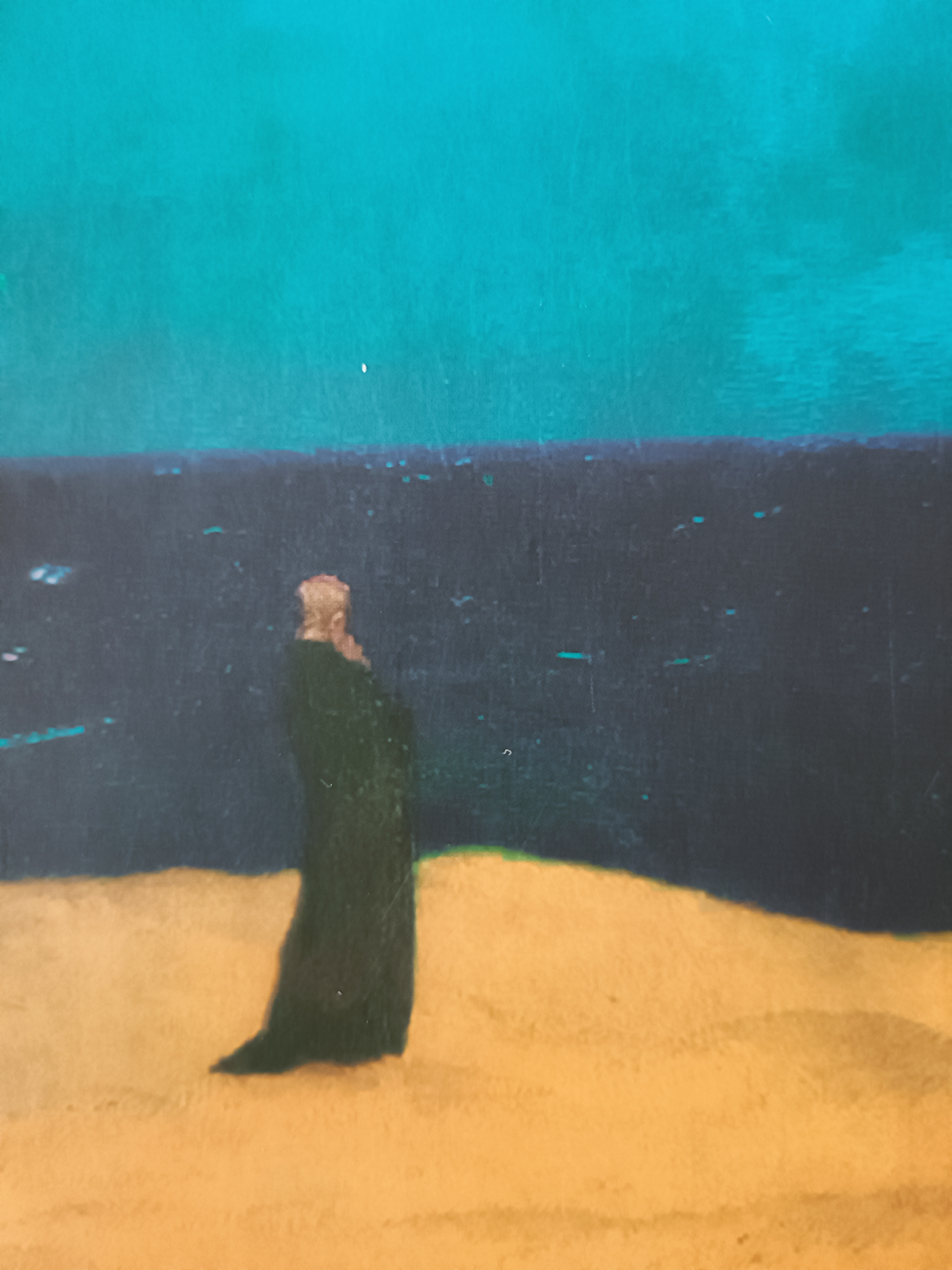
- Can a novel’s intellectual ambition end up overshadowing the story it sets out to tell?
- Do you see narrative fragmentation as an enriching device or as an obstacle to connecting with the characters?
- Do you prefer novels that provide answers, or those that leave you with more questions than certainties?
Type your e-mail address and click on subscribe to be notified of new content!
- Pau, el hombre que mira lejos
- Pau, the Man Who Gazes into the Distance
- Orlando
- Orlando
- Dewey
- Dewey Lee Más Libros
- One hundred unique stories in one hundred words
- Cien relatos irrepetibles de cien palabras
- Canciones del príncipe Vogelfrey
- Songs of Prince Vogelfrei
Cambia el idioma a:



Which are the latest blog posts?