This book is a work of contemporary poetry within German literature.
This book can therefore be classified within the genre of poetry in the form of lyric songs, and further subdivided into categories such as philosophical and satirical poetry, epigrammatic poetry and aphorisms in verse.
This is a first edition published by José J. de Olañeta in 1980; a Spanish publishing house founded in 1976 in Palma de Mallorca. It publishes books on philosophy, spirituality and mysticism, travel and culture, mythology, anthropology, the history of Mallorca… This book is available in English.
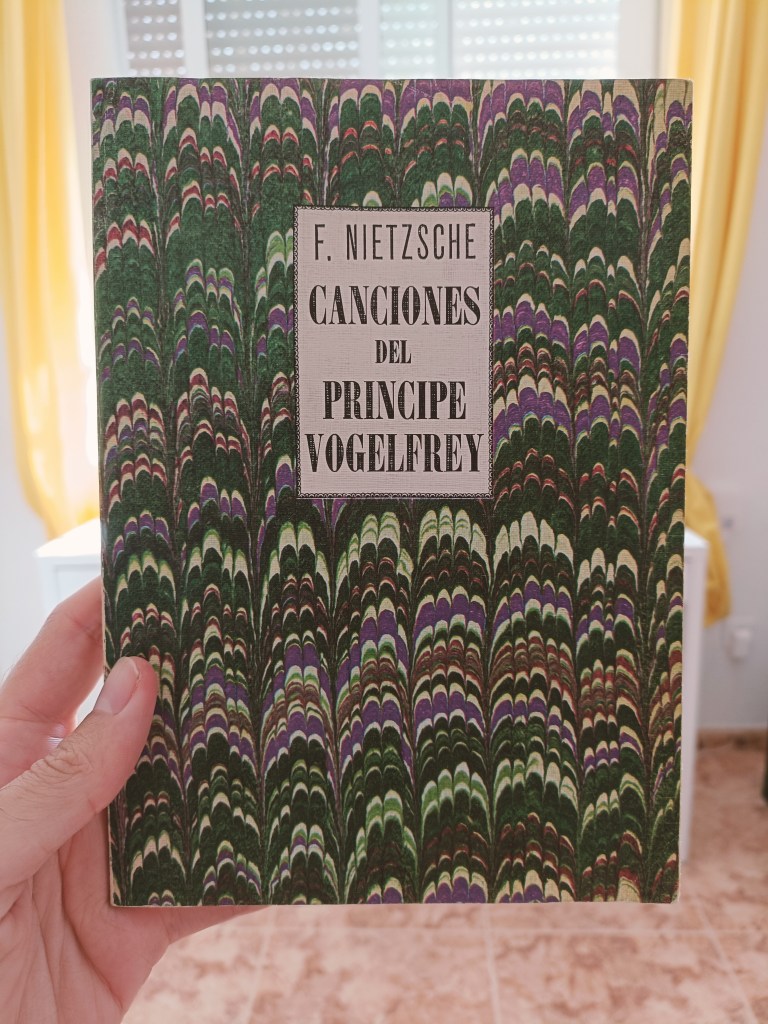
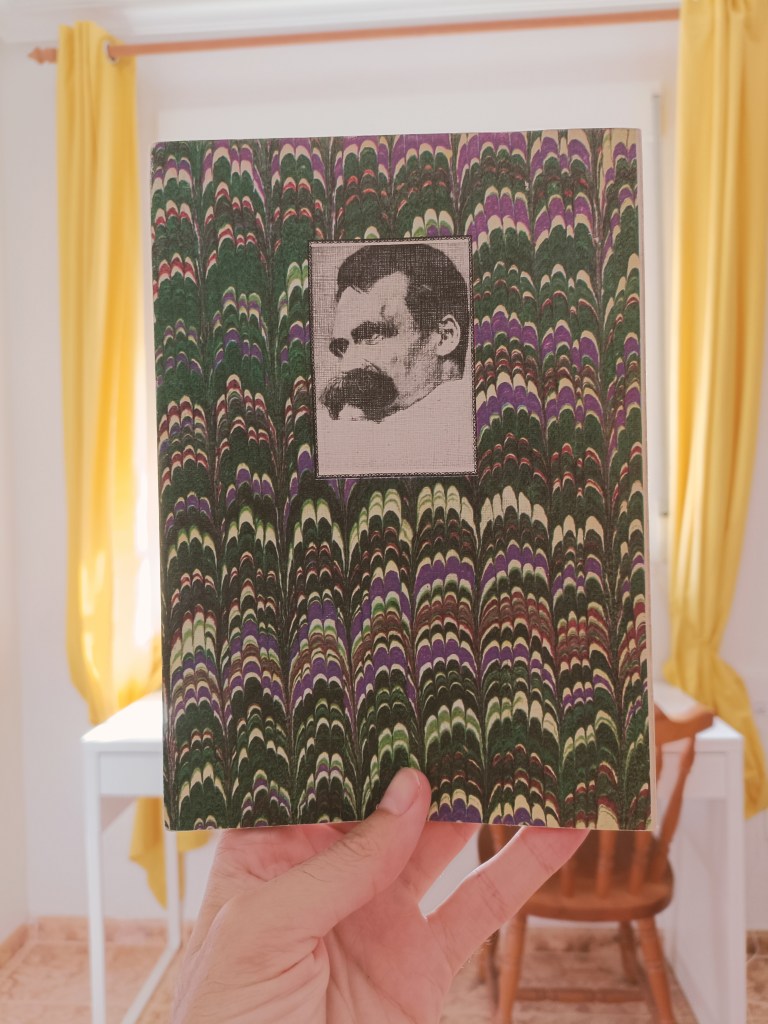
- Publication date: 1887
- Country: Germany
- Pages: 62
- Reading date: June 2026
- Rating: 2/5
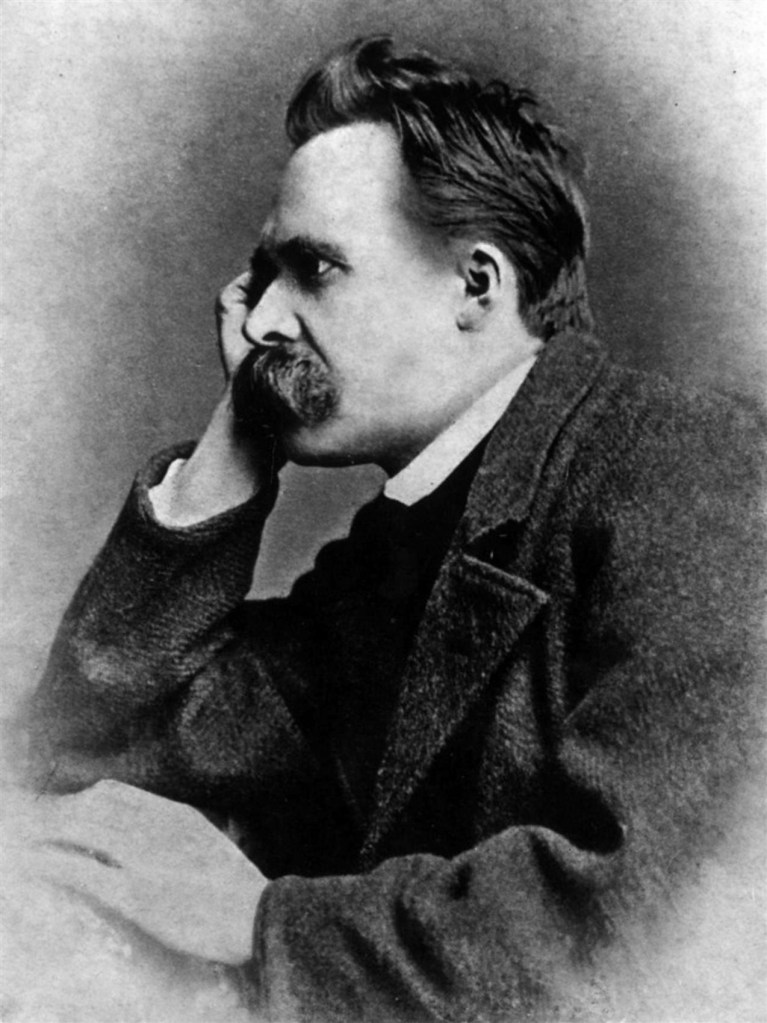
The author is Friedrich Wilhelm Nietzsche (Röcken, Province of Saxony, Kingdom of Prussia, 1844 – Weimar, Grand Duchy of Saxe-Weimar-Eisenach, German Empire, 1900). He was a German philosopher, classical philologist, essayist, poet and composer. Born into a deeply religious and Protestant family, his father, who was a Lutheran pastor, died at a young age. Consequently, he spent most of his youth living with his mother, his sister, two aunts and his grandmother on his father’s side, before entering Pforta to study Greek, Latin and the classical authors. He studied Theology and Classical Philology at the University of Bonn and subsequently continued his studies at the University of Leipzig. In 1869, at the age of 24, he was appointed professor of Classical Philology at the University of Basel on account of his talent. In 1879 he gave up teaching due to ill health and, over the following years, travelled throughout Europe and produced the bulk of his philosophical work. In 1889, he suffered a mental breakdown in Turin, after which he spent years in the care of his mother and later his sister Elisabeth. From that point on, he never again wrote consciously. Nietzsche became one of the most influential philosophers of the contemporary era. He died at the age of 55 from pneumonia, following several years of significant cognitive decline and other health problems, the cause of which is still debated.
Other books by the same author are:
- The Birth of Tragedy (1872)
- Human, All Too Human (1878)
- The Gay Science (1882)
- Thus Spoke Zarathustra (1883–1885)
- Beyond Good and Evil (1886)
- On the Genealogy of Morality (1887)
- Twilight of the Idols (1889)
- The Antichrist (1895)
- Ecce Homo (1908, published posthumously, written in 1888)
Within the list of other books published by the same author, those for which there is already a post in this blog are highlighted.
Click on it to read it!
I found this book of poems by the philosopher Friedrich Nietzsche in a second-hand bookshop in Madrid. It caught my eye straight away, as I’ve read several books by the German philosopher and wasn’t aware that there was a book specifically containing his poems. I bought it for a very low price, although the edition is quite old and in reasonable condition.
The book is divided into three main parts. The first is a preface which briefly discusses the work, serving as an introduction to it. Next comes the section entitled Joke, Cunning, and Revenge. This is the first section of poetry, comprising 63 short poems or epigrams. It appears that this section served as a prelude to the book The Gay Science, published in 1882 by the author himself. This section is characterised by aphorisms, satire and irony, as well as wordplay.
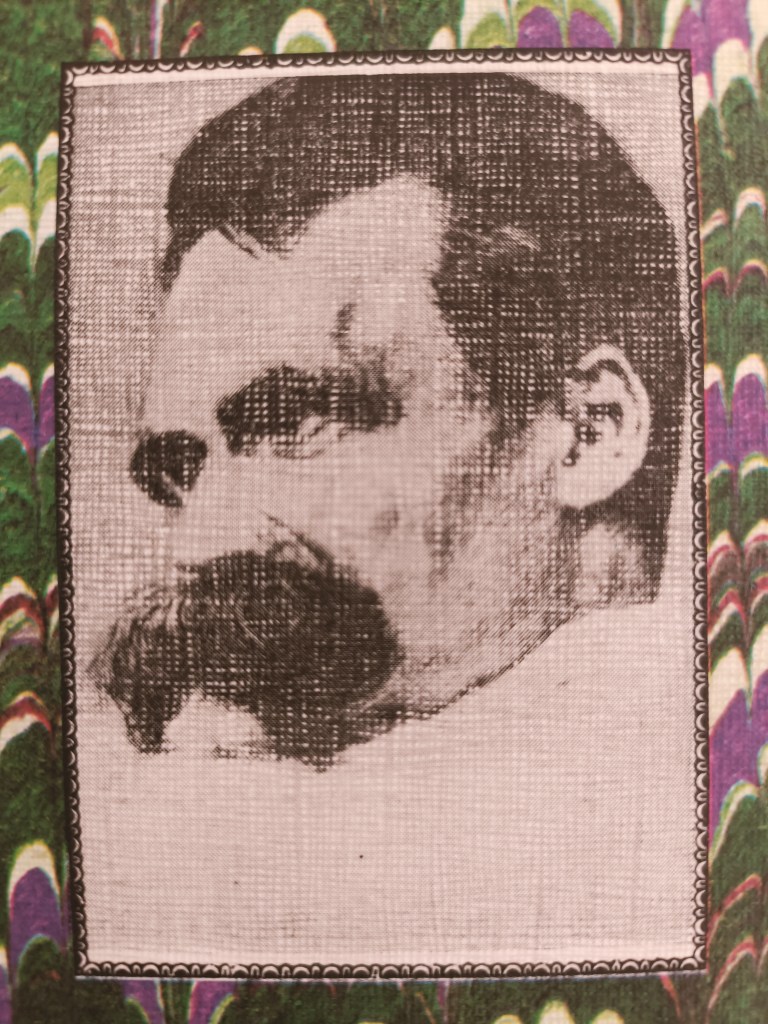
«The texts of the Songs of Prince Vogelfrei harbour the hope of restoring the harmonious unity of ancient Greece between dance, music and the spoken word. Plato, as is generally acknowledged, invented dialogue as a literary form: Philosophy. Yet today, philosophy is writing, and all writing is falsification. In the Phaedrus we read: ‘…writing is a motionless discourse’. The Songs of Prince Vogelfrei celebrate this paradox: they yearn for the words of a singer in whom every verse dances in a play of symmetries from all ages, leaping and laughing at these very symmetries. Writing thus becomes a game of skill in shuffling words».
Josep María Guerra i Cabra
«My Good Luck:
Weary of Seeking had I grown,
So taught myself the way to Find:
Back by the storm I once was blown,
But follow now, where drives the wind».«My Roses:
My luck’s good—I’d make yours fairer,
(Good luck ever needs a sharer),
Will you stop and pluck my roses?Oft mid rocks and thorns you’ll linger,
Hide and stoop, suck bleeding finger—
Will you stop and pluck my roses?For my good luck’s a trifle vicious,
Friedrich Nietzsche
Fond of teasing, tricks malicious—
Will you stop and pluck my roses?».
The following section of the book gives this edition its title: Songs of Prince Vogelfrei. It comprises 14 poems and, it seems, formed the final appendix to an expanded edition of The Gay Science in 1887. Thus, both poetic sections served as the prelude and final appendix to the same book written by the philosopher. In Songs of Prince Vogelfrei, the poems are more lyrical, song-like, lengthy and elaborate than the previous section, which was more aphoristic. Themes important to the philosopher, such as freedom, solitude, nature, travel and the affirmation of life, feature prominently. However, he does not neglect the irony so characteristic of his writing style.
«Against Pride:
Brother, to puff thyself up ne’er be quick:
For burst thou shalt be by a tiny prick!».«The Slave:
A. He stands and listens: whence his pain?
Friedrich Nietzsche
What smote his ears? Some far refrain?
Why is his heart with anguish torn?
B. Like all that fetters once have worn,
He always hears the clinking—chain!».
I found it intriguing to look into the figure of Prince Vogelfrei, after whom the book is named. It turns out that Vogelfrei conceals a play on meanings: on the one hand, it means free as a bird. Historically, however, it also means outside the protection of the law. It thus conveys diverse yet related meanings, such as freedom, independence, marginalisation, and being an outcast… I believe both meanings were intended by the philosopher, who was so fond of wordplay that he deliberately plays on the ambiguity of the word. Vogelfrei thus unites freedom and exclusion: free from social conventions, yet at the same time outside the security of the group.
«Against the Laws:
From today hangs on a hair cord
around my neck a watch:
From today the course of the stars,
the sun, cock-crow and shadows stop,
and what up to now has told me the time,
that is now dumb, deaf and blind: —
The whole of Nature is silenced
by the tic-toc of law and the clock.«.
Friedrich Nietzsche
One of the most interesting things I gained from reading this collection of philosophical and satirical poems was the contrast between Nietzsche the poet and Nietzsche the philosopher. It is fascinating to see how the German philosopher expresses his ideas through verse, imagery and songs, rather than through detailed arguments. Whilst this lyrical element is present in some of his other books, here it is the sole focus.
Alongside this, we also see various facets of the same author. On the one hand, there is the more mocking, provocative Nietzsche… and on the other, his more intimate, contemplative, impassioned side…
«To Goethe:
The Undecaying
Is but thy label,
God the betraying
Is poets’ fable.Our aims all are thwarted
By the World-wheel’s blind roll:
“Doom,” says the downhearted,
“Sport,” says the fool.The World-sport, all-ruling,
Friedrich Nietzsche
Mingles false with true:
The Eternally Fooling
Makes us play, too!».
In conclusion, this book has been useful for appreciating other facets of the philosopher Nietzsche and understanding how they interrelate. In other words, it has been rewarding to consider the dialogue between the philosopher and the poet, between provocation and contemplation. However, as regards the work’s shortcomings, in my view I would highlight that it may present difficulties for readers unfamiliar with the philosopher’s thought. In light of this, I would have included a more detailed introductory section discussing his thought and writing. Furthermore, and to conclude, there is at times a certain inconsistency between the different poems. Some are highly evocative and reflective, whilst others are more like jokes, jibes or mere witticisms. This results in not everything holding the same level of interest for the reader.
Some reflections:
- Can poetry convey philosophical ideas with the same depth as an essay?
- Do you think humour and satire make philosophical thought more accessible, or do they make it harder to interpret?
- Is it necessary to be familiar with Nietzsche’s philosophy in order to understand and enjoy these poems?
Type your e-mail address and click on subscribe to be notified of new content!
- Dewey
- Dewey Lee Más Libros
- One hundred unique stories in one hundred words
- Cien relatos irrepetibles de cien palabras
- Canciones del príncipe Vogelfrey
- Songs of Prince Vogelfrei
- A bestiary of prehistory
- Un bestiario de la prehistoria
- Los límites de mi lenguaje: Meditaciones sobre la depresión
- The limits of my language: Meditations on depression
Cambia el idioma a:



Which are the latest blog posts?