This book is a contemporary Japanese manga that tackles issues such as fatphobia, eating disorders, self-esteem and beauty standards.
As such, this book can be classified within the narrative genre as a manga or graphic novel, and further subclassified as a psychological and social drama aimed at an adult female audience (josei).
This is the first Spanish edition, published by Ponent Mon, a publisher specialising in comics and graphic novels, particularly by international authors. This book is available in English.
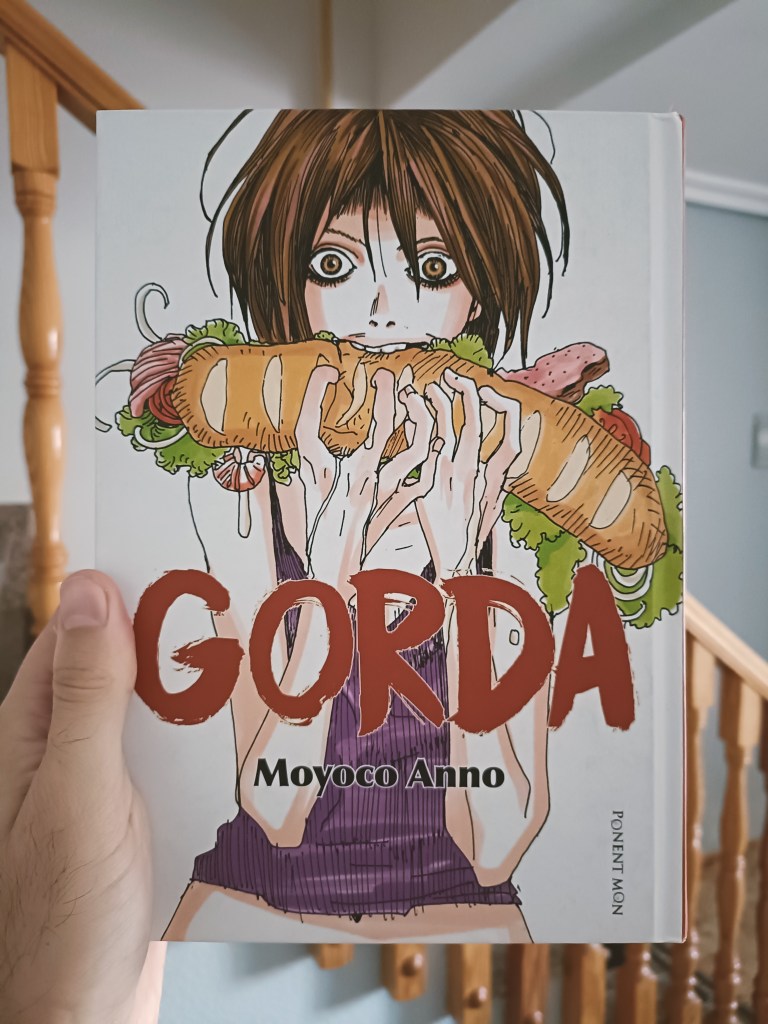
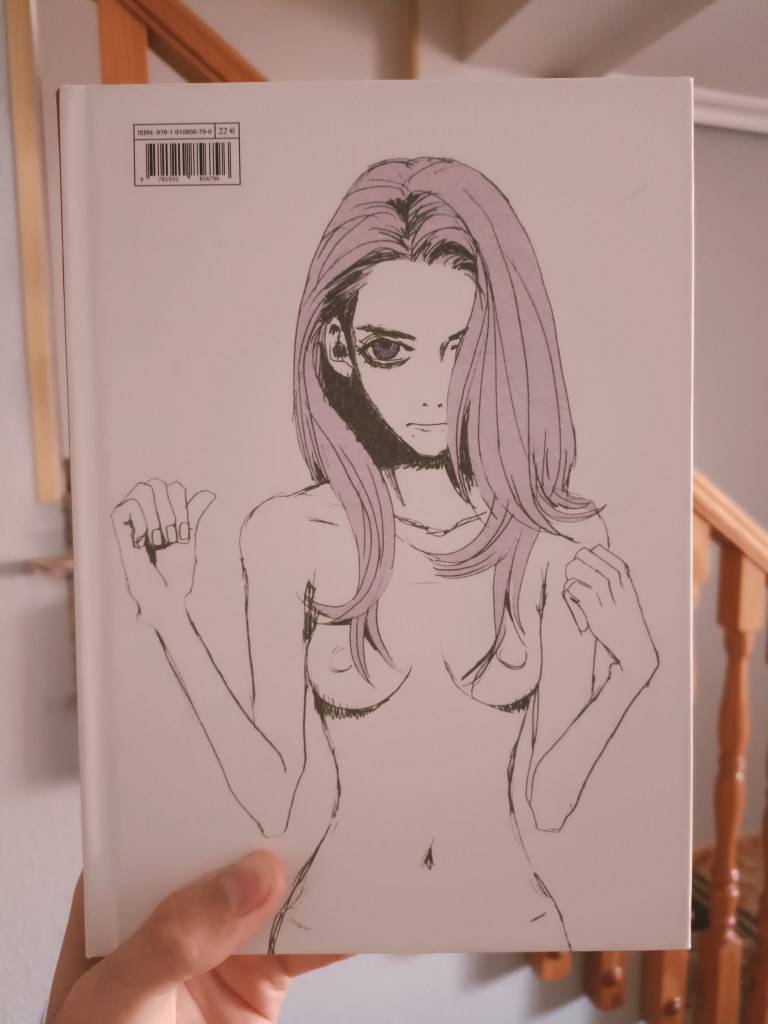
- Publication date: 1997
- Country: Japan
- Pages: 264
- Reading date: April 2021
- Rating: 3/5
The author of this manga is Moyoco Anno (Tokyo, Japan, 1971–), a Japanese artist and scriptwriter specialising in manga. She studied at the private Shōtoku Gakuen High School in Musashino and began her professional career in 1989, whilst still a student. She subsequently worked as an assistant to the renowned mangaka Kyōko Okazaki. Her work explores themes such as female identity, beauty standards, romantic relationships and social pressures. Throughout her career, she has received various awards, including the 29th Kōdansha Manga Award in 2005 and the Excellence Award at the 23rd Japan Media Arts Festival, presented in 2020. Her work is characterised by an expressive artistic style and the portrayal of complex female characters, particularly within manga aimed at adult women (josei).
Other books published by her are:
- Sakuran (2001)
- Sugar Sugar Rune (2003)
- Tokio Style (2004)
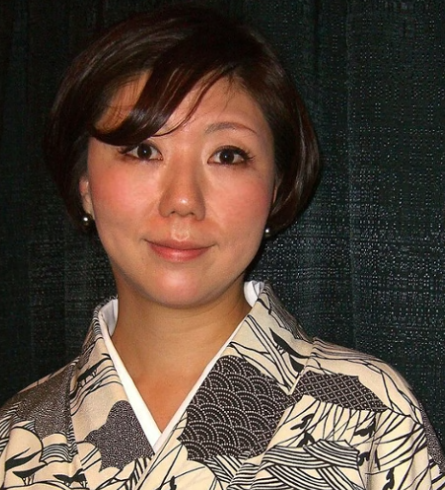
Within the list of other books published by the same author, those for which there is already a post in this blog are highlighted.
Click on it to read it!
I came across this book on the recommendation of someone very special to me. Knowing my interest in mental health, they shared this manga with me, which I read as soon as I could.
The manga tells the story of Noko, a young woman who suffers from workplace bullying, insecurity and a deep emotional dependence on her boyfriend, who manipulates her and is unfaithful. As a way of escaping her suffering, the protagonist decides to lose weight, believing that her physical appearance is the cause of her problems. This leads her to develop bulimia and suffer psychological distress.
The protagonist, it turns out, is a character who makes decisions that are detrimental to herself, who is insecure and contradictory. This, I believe, lends psychological realism to the work by emphasising Noko’s humanity.
However, I found the supporting characters to be excessively cruel. I think the bullying, malice and manipulation on the part of Noko’s circle of friends are so exaggerated that they lose their credibility. I believe this exaggeration is intentional on the author’s part to highlight social violence, but in my opinion it ends up turning these characters into caricatures.
«Sometimes men say really horrible things to me. Maybe I’ve done something wrong, but I honestly don’t know why it happens».
Noko
One of the contributions of this manga is that it denounces not only fatphobia, but also the sexual objectification of women, as even those characters who conform to beauty standards are subject to male expectations. This encourages reflection on power relations and the dynamics of emotional dependence.
On the other hand, I think that the way the story deals with eating disorders can sometimes be counterproductive. I believe there are scenes – or even the ending itself – which could convey confusing messages or be harmful to vulnerable people. Sometimes the line between portraying self-destructive behaviour and encouraging it is not entirely clear.
Thus, the work’s pessimistic ending can be interpreted in two ways: either as a realistic portrayal of the difficulty of breaking self-destructive patterns, or as a missed opportunity to psychologically develop Noko, the protagonist.
«I felt as though I were wearing a coat made of fat that I couldn’t take off».
Noko
As for the artwork’s style, I have to be honest and say that I didn’t like it very much. I found it too simplistic, unattractive and as though it were a rough sketch rather than the final published version. Some people might call this a grotesque style and argue that it suits the tone of the story, but I saw it more as rather half-baked.
«All I need to do is eat. Then I don’t have to think about anything».
«I don’t want to go back to the way I was. I’ll never forget it. I have to lose weight».
Noko
In conclusion, I believe that In Clothes Called Fat is an unsettling and provocative work, whose strength lies in challenging the belief that achieving a certain ideal of beauty guarantees happiness. The objectification of women does not disappear when Noko loses weight, as society treats women’s appearance as a measure of their personal worth.
On the other hand, on reflection, the work’s pessimistic and circular ending may point in that direction. Noko is unable to free herself from her insecurities because she tries to change her appearance by losing weight without transforming her relationship with herself.
«Do you really think you’ll be happy if you lose weight?».
Fujimoto
Some reflections:
- To what extent are we responsible for our insecurities when they have been fuelled by our environment?
- Why do we continue to associate thinness with success, happiness and social acceptance?
- Can our physical appearance change without our perception of ourselves changing?
Type your e-mail address and click on subscribe to be notified of new content!
- In Clothes Called Fat
- Gorda
- On Love: Aspects of a Single Theme
- Estudios sobre el amor
- The Incest Diary
- Diario de un incesto
- Pau, el hombre que mira lejos
- Pau, the Man Who Gazes into the Distance
- Orlando
- Orlando
Cambia el idioma a:


Which are the latest blog posts?