This book is a contemporary novel in Porguese literature.
Thus, it can be classified within the narrative genre in the form of a novel and subclassified into categories such as historical fiction and satire.
This is a fourth edition released by Editorial Alfaguara in 2009, which is a Spanish publishing house founded in 1964. It publishes narrative books as well as children’s and young adult literature. It was founded by Camilo José Cela. Currently, since 2013, it belongs to the Penguin Random House group. This book is available in English.
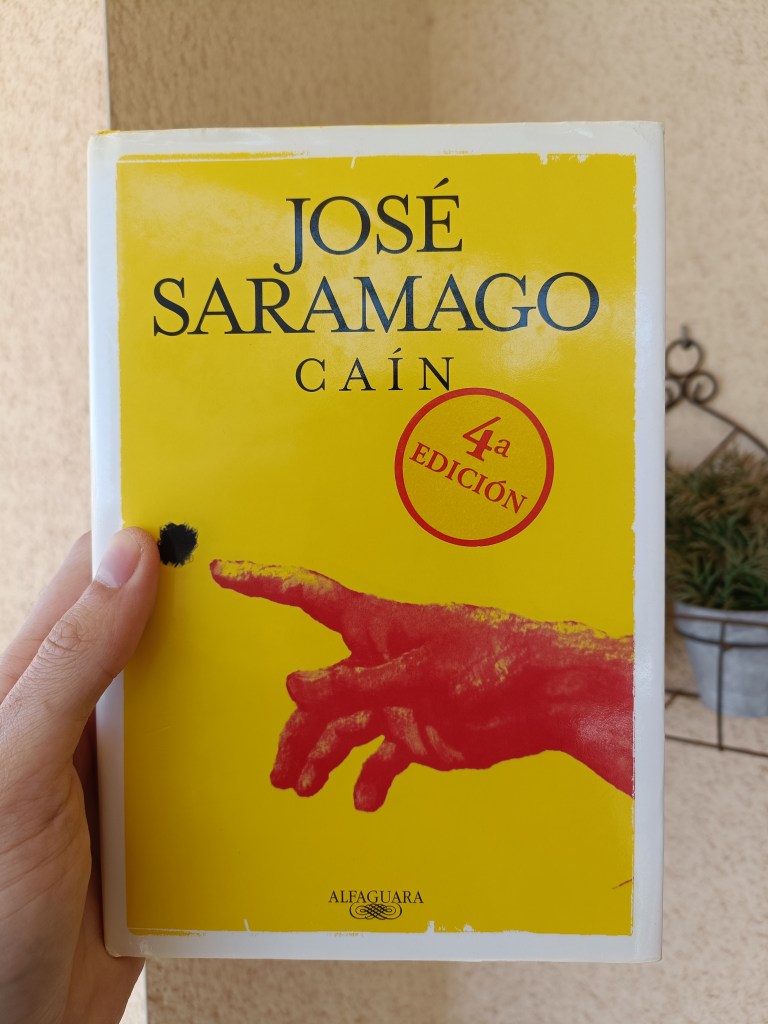
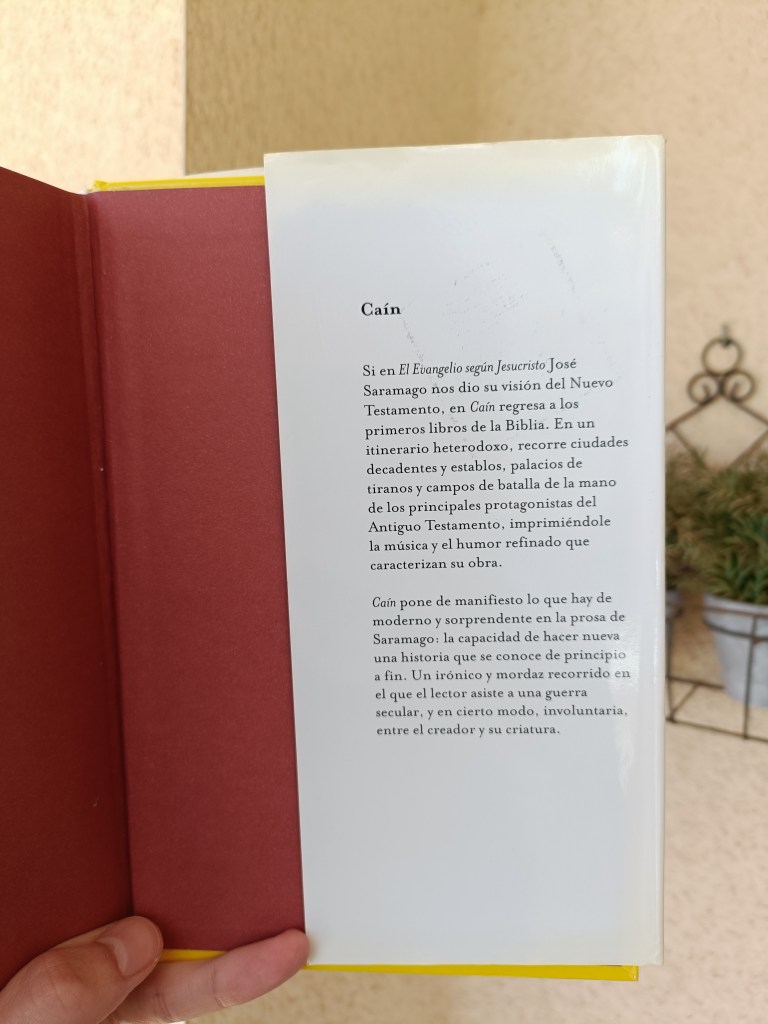
- Publication date: 2009
- Country: Portugal
- Pages: 189
- Reading date: May 2021
- Rating: 3/5
The author is José Saramago (Azinhaga, Portugal, 1922-Tías, Spain, 2010). He was a Portuguese writer who was awarded the Nobel Prize for Literature in 1998. In his youth he could not finish his studies because his parents could not afford to pay for his schooling. He worked in different jobs (in a mechanical blacksmith’s shop, as an administrative employee, in an insurance company, as a journalist, as a literary critic and cultural commentator…) before being able to devote himself exclusively to literature from 1966. He spent most of his life in Portugal, but in 1991 he moved to Spain in protest after the uproar caused by the publication of one of his books. He died at the age of 87 of chronic leukaemia which led to multi-organ failure.
Other books by the same author are:
- The Gospel According to Jesus Christ (1991)
- Blindness (1995)
- All the Names (1997)
- Seeing (2004)

Within the list of other books published by the same author, those for which there is already a post in this blog are highlighted.
Click on it to read it!
José Saramago is one of those authors of whom I always saw books in the narrative section of bookshops, which never caught my attention until someone told me that his work had hints of magical realism. It was then that I did some research and added several of his literary works to my list of books to read.
However, it was not until 2021 when I read Cain, my first Saramago book. I found it on one of my «book raids» in one of Madrid’s Tuuulibrerías (second-hand bookshops). It was a real find which allowed me to start reading the work of this Portuguese author.
«The history of mankind is the history of our misunderstandings with god, for he doesn’t understand us, and we don’t understand him».
José Saramago (narrator)
I know I mentioned that it was the touch of magical realism which made me curious to read José Saramago, but curiously enough, Cain is framed more within historical fiction and parody or satire. The plot of the novel tells us about the adventures and misadventures of the biblical character Cain after being condemned by God to wander the Earth for having killed his brother Abel.
This is the starting point of the story. From there, Saramago gives Cain the power to travel through time and thus get to know other biblical characters from the Old Testament such as Abraham, Isaac, Job, Noah…
Using this resource, the author uses Cain’s voice to question the actions of the God of the Old Testament and to make a criticism through the irony of satire towards the events and characters of this part of the Bible and the Christian religion.
The character of Lilith plays an important role in the protagonist’s journey, helping to demystify female sexuality and defend women’s sexual desire.
«No one is just one person, you, for example, are both cain and abel, And you, Oh, I am all women, and all their names are mine, said Lilith».
Lilith
«Cain considers life and can find no explanation for it, there is that woman, who although clearly sick with desire is enjoying postponing the moment of surrender, which is not at all the right word, because lilith, when she does finally open her legs to allow herself to be penetrated, will not be surrendering, but trying to devour the man to whom she said, Enter».
José Saramago (narrator)
I found Saramago’s style very personal, brimming with irony (which is perfect for this kind of book) and using simple language to convey his ideas and message. His narrative gaze is compassionate, but not without criticism of the values with which it conflicts.
The author’s implicit criticism is also striking in the written language of the novel. For example, god is written instead of God, as well as the rest of the proper names, except if it is the first word of a sentence. This has given me food for thought and I have come to the conclusion that for Saramago, biblical characters are story elements from the human imagination, not real characters, and that is why he writes them in lower case. Mere personal opinion of mine here.
I would like to mention that the long sentences, full of commas in the dialogues between the characters of the novel confused me a lot as it is the first time I read a dialogue with such a structure, practically naked.
In conclusion, Cain was the first work I have read by José Saramago. I was not disappointed, but neither did it make a great impression on me. I found it original his way of continuing in fiction the story of Cain’s life, which in the Bible does not go into more depth after his condemnation to wander the world. Nevertheless, I would like to read more important works by this Portuguese author in the future, as well as more representative of the magical realism that is so personal in his literary work.
«I’m tired of this talk that the Lord’s designs are inscrutable, replied Cain, God should be transparent and crystal clear instead of this continuous dread, this continuous fear».
Cain
Some reflections:
- What do you think is the cruelest thing the God of the Old Testament did?
- How is the story of Cain and Abel generally discussed in our society? What role does each play?
- How do you feel about writing historical fiction with biblical stories, and do you think the uproar generated by their publication is deserved or an exaggeration?
Type your e-mail address and click on subscribe to be notified of new content!
- I overcame the anorexia
- Yo vencí la anorexia
- Pensando en ellos
- Thinking about them
- Saldremos de esta: Guía de salud mental para el entorno de la persona en crisis
- We will get over this: A mental health guide for the environment of the person in crisis
- Traces of Madness: A Graphic Memoir
- Desmesura: Una historia cotidiana de locura en la ciudad
- When I sing, mountains dance
- Canto yo y la montaña baila
Cambia el idioma a:

 arquerociego
Which are the latest blog posts?