This book is a contemporary novel in English literature.
Thus, it can be classified within the narrative genre in the form of a novel and subclassified into categories such as science fiction, dystopia, or philosophical novel.
This is a fourth edition launched by Ediciones Destino in 1983, which is a Spanish publishing house founded in 1942 which since 1996 has belonged to Grupo Planeta and publishes important books by Spanish and foreign authors, as well as some essays. It also presents the annual Premio Nadal. This book is available in English.


- Publication date: 1949
- Country: United Kingdom
- Pages: 326
- Reading date: June 2022
- Rating: 4/5
The author is George Orwell, pseudonym of Eric Arthur Blair (Motihari, British Raj, 1903-London, UK, 1950). He was an Indian-born British writer, who held various jobs throughout his life, and whose literary work focused on novels, essays, literary criticism and journalism. He died at the age of 46 of tuberculosis.
Other books by the same author are:
- Down and Out in Paris and London (1933)
- Burmese Days (1934)
- The Road to Wigan Pier (1937)
- Homage to Catalonia (1938)
- Animal Farm (1945)

Within the list of other books published by the same author, those for which there is already a post in this blog are highlighted.
Click on it to read it!
1984 is a book I had always heard of, but had not yet taken the plunge to read. It was a few years ago when I read A Brave New World by Aldous Huxley, when it was first recommended to me. Since then, different people have mentioned it to me until one of them, a very special one, gave it to me as a gift, and I took that gesture as an indication that it was time for me to venture into it.
In the society depicted in this classic dystopia, there is nothing which escapes the State and its control. The State is the creator of reality and the manipulator of human thought and language. The protagonist of the novel is Winston Smith, a worker in the Ministry of Truth in Oceania (one of the three totalitarian states into which the world of the novel is divided). His job is to rewrite history, one of the forms of manipulation carried out by the State in this society. His character is somewhat melancholic and reflective of the past, which helps to shape him as a figure who is a symbol of rebellion throughout the plot.
«Every record has been destroyed or falsified, every book has been rewritten, every picture has been repainted, every statue and street and building has been renamed, every date has been altered. And that process is continuing day by day and minute by minute. History has stopped. Nothing exists except an endless present in which
Winston Smith
the Party is always right»

«The possibility of enforcing not only complete obedience to the will of the State, but complete uniformity of opinion on all subjects, now existed for the first time»
From the forbidden book which Winston Smith reads
I could go on and on about the story of the novel and the ways in which the State exercises absolute control over society, but that is not the purpose of this review. I don’t like to tell too much about the plot of my readings in order to leave a certain amount of mystery for those who are curious and want to read this or that book.
I would like to share that the plot as a whole was very dark, full of terrifying moments which filled me with helplessness and fear for the fate of the characters. While it’s true that I didn’t connect with any of them, I felt claustrophobic and sad as I followed them into the spaces and situations they were moving towards. In particular, it made me very tense to see them in those moments of happiness or peace that they might enjoy, as these were presented as fragile moments and always threatened by a terrifying ending.
It could be said that the author does not intend us to empathise with the characters because of the way they are, as he does not go too deeply into them, but rather, our empathy towards them is motivated by his excellent description of the places, the society and the conflicts present in the story being told. Moreover, there are moments in which the narrative seemed to me closer to an essay than to a novel, due to the great weight of didactic prose.
«The Party seeks power entirely for its own sake. We are not interested in the good of others; we are interested solely in power. Not wealth or luxury or long life or happiness: only power, pure power. What pure power means you will understand presently. We are different from all the oligarchies of the past, in that we know what we are doing. All the others, even those who resembled ourselves, were cowards and hypocrites. The German Nazis and the Russian Communists came very close to us in their methods, but they never had the courage to recognize their own motives. They pretended, perhaps they even believed, that they had seized power unwillingly and for a limited time, and that just round the corner there lay a paradise where human beings would be free and equal. We are not like that. We know that no one ever seizes power with the intention of relinquishing it. Power is not a means, it is an end. One does not establish a dictatorship in order to safeguard a revolution; one makes the revolution in order to establish the dictatorship. The object of persecution is persecution. The object of torture is torture. The object of power is power»
O’Brien
The reading of the book as a whole was somewhat dense, not because of boredom, but because of the author’s detailed setting of the world and society he presents us with. So, in my opinion, it is a novel that deserves to be read carefully in order to better understand the conflicts, situations and concepts it deals with, and thus enjoy it more. It is interesting the amount of terms created by the author in this novel which become part of the aforementioned setting.
One of the things which most caught my attention is the manipulation of language carried out by the State in this dystopia, in order to gradually impoverish it and thus alter people’s memory, identity and sense of reality.
«It is the achievement of the Party to have produced a system of thought in which both conditions can exist simultaneously. And upon no other intellectual basis could the dominion of the Party be made permanent. If one is to rule, and to continue ruling, one must be able to dislocate the sense of reality»
From the forbidden book which Winston Smith reads
The end of the book surprised me with its pessimism and the feeling of defeat it leaves you with. It is easy to get affected by the hopelessness it conveys. Let’s remember that Orwell’s dystopia is not a prophecy, but a satire. In conclusion, it is a tough read, although it is recommendable for reflecting on issues such as freedom, control, censorship, identity and power.
«Obedience is not enough. Unless he is suffering, how can you be sure that he is obeying your will and not his own? Power is in inflicting pain and humiliation. Power is in tearing human minds to pieces
O’Brien
and putting them together again in new shapes of your own choosing»
«Facts, at any rate, could not be kept hidden. They could be tracked down by enquiry, they could be squeezed out of you by torture. But if the object was not to stay alive but to stay human, what difference did it ultimately make? They could not alter your feelings: for that matter you could not alter them yourself, even if you wanted to. They could lay bare in the utmost detail everything that you had done or said or thought; but the inner heart, whose workings were mysterious even to yourself, remained impregnable»
Narrator, on Winston’s reflection
Some reflections:
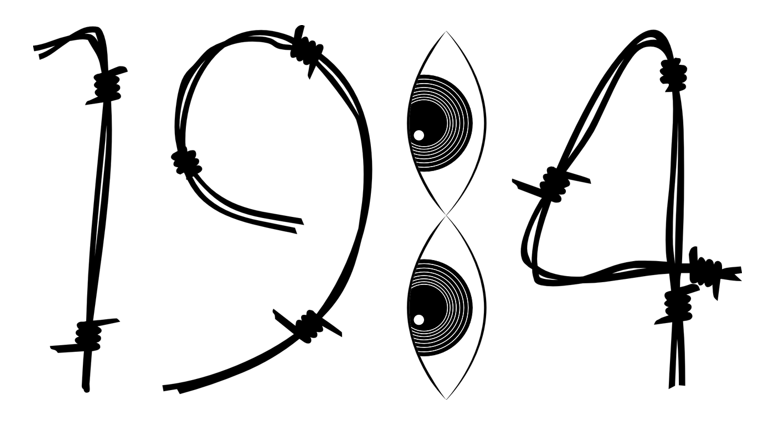
- Do we see the world as real as we can take it?
- How would you fight the manipulation of information? Is it a losing battle?
- The greater the authority, the greater the truth? Or the greater the distrust and paranoia? Is authority necessary? Why?
- Is the quest for power itself self-destructive?
Type your e-mail address and click on subscribe to be notified of new content!
Which are the latest blog posts?
- I overcame the anorexia
- Yo vencí la anorexia
- Pensando en ellos
- Thinking about them
- Saldremos de esta: Guía de salud mental para el entorno de la persona en crisis
- We will get over this: A mental health guide for the environment of the person in crisis
- Traces of Madness: A Graphic Memoir
- Desmesura: Una historia cotidiana de locura en la ciudad
- When I sing, mountains dance
- Canto yo y la montaña baila
Cambia el idioma a:

 arquerociego
2 respuestas a “1984”
———:)
Wow, I am so glad I stumbled upon this blog post about 1984! It’s one of my favorite books and this analysis was spot on. Thank you for sharing your thoughts and insights. Can’t wait to read more from you!
http://Passiveincomepro.website: Your key to unlocking a steady stream of income without lifting a finger.
Me gustaMe gusta
Thank you for your positive comment. I am not interested in getting any income with my blog, thank you. Have a nice day!
Me gustaMe gusta