This book is a contemporary novel in German literature.
Thus, this book can be classified within the narrative genre in the form of a novel and subclassified into categories such as the allegorical and philosophical novel.
This is an unique paperback school edition released by Ediciones B S. A. in 2010, which is a Spanish publishing house founded in 1987. It publishes books for adults (fiction and non-fiction), children, young adults, illustrated books and comics. Currently, since 2017, it belongs to the Penguin Random House group. This book is available in English.
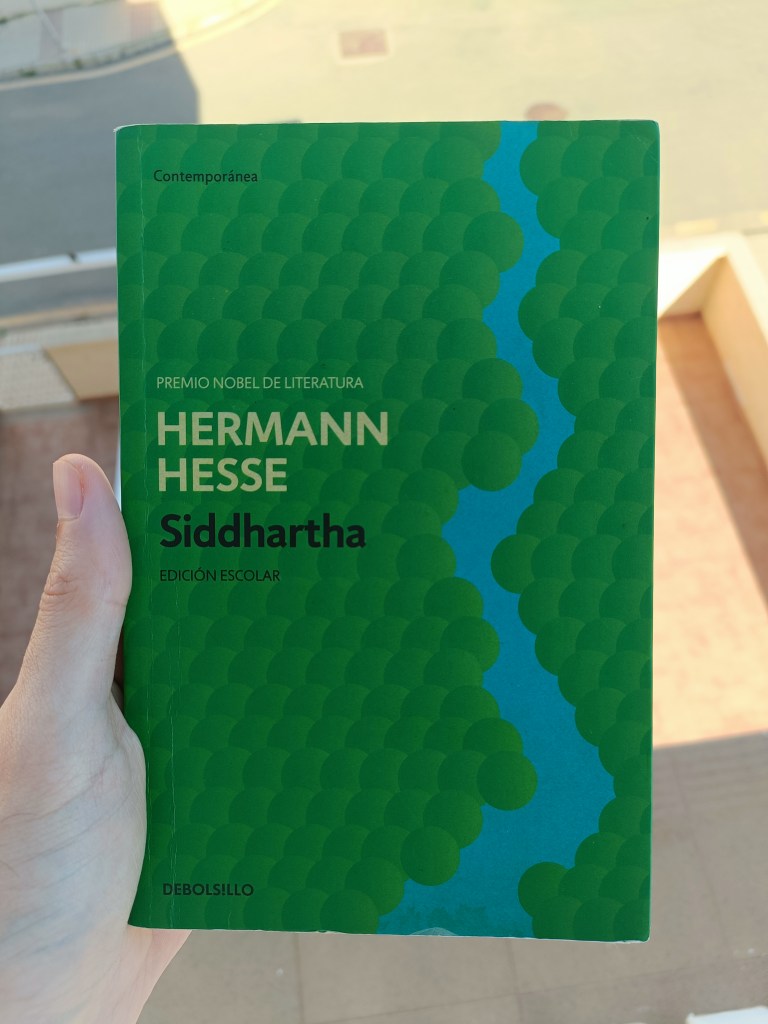

- Publication date: 1922
- Country: Switzerland
- Pages: 263
- Reading date: June 2013
- Rating: 5/5
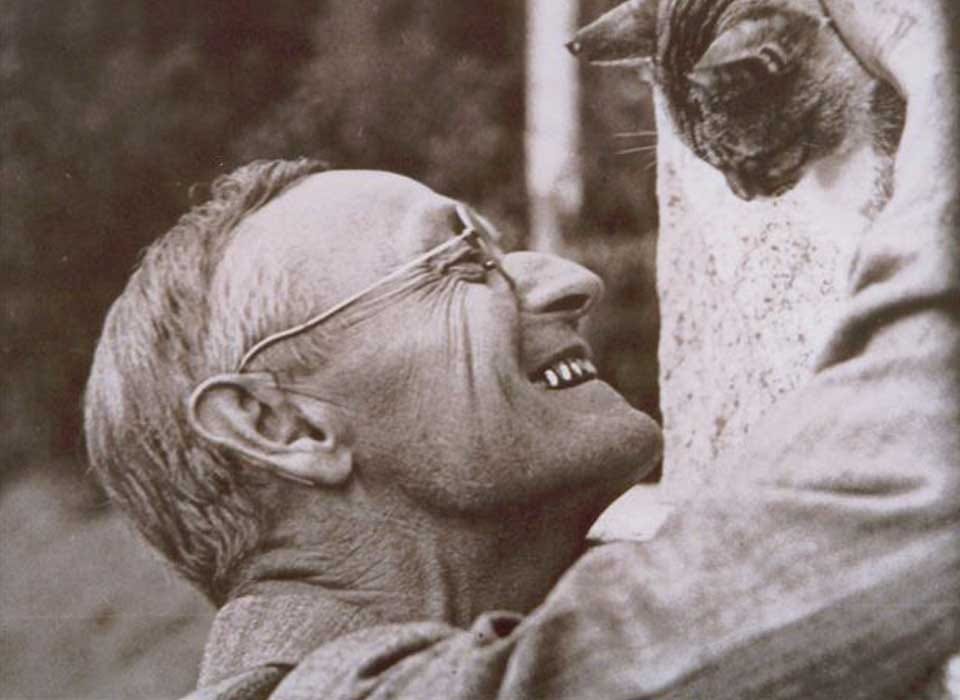
The author is Hermann Karl Hesse (Calw, Kingdom of Württemberg, German Empire, 1877-Montagnola, Canton Ticino, Switzerland, 1962). He was a German writer, poet, novelist and painter who later became a naturalised Swiss citizen. His family were Christian missionaries and owned a Christian publishing house. Although Hesse entered an evangelical seminary as a young man following in his family’s footsteps, he ran away from it because of the rigidity of education. He often had violent conflicts with his parents, which caused him to go through different schools and institutions. In addition, he suffered from depression at various times in his life, and on some occasions expressed suicidal thoughts. During his turbulent life he worked as a bookseller’s apprentice, a mechanic in a watch factory and a bookseller’s assistant. He was not without conflict with the German press and public because of his anti-war stance during the First World War, which plunged him into a deep existential crisis, aggravated by the death of his father, the illness of his son Martin and the schizophrenic crisis of his then wife. As a result, he had to seek psychotherapy with a disciple of the psychiatrist Carl Gustav Jung. Because of his anti-war reputation, no German newspaper wanted to publish his articles in the 1930s, so he had to publish them from Switzerland. He received the Nobel Prize for Literature in 1946. He was a great influence on German literature in his time, but his worldwide fame only came to him posthumously. He died of a cerebral haemorrhage in his sleep at the age of 85.
Other books by the same author are:
- Demian (1919)
- Steppenwolf (1927)
- The Glass Bead Game (1943)
Within the list of other books published by the same author, those for which there is already a post in this blog are highlighted.
Click on it to read it!
Siddhartha by Hermann Hesse was the first philosophical book I ever read. I don’t quite remember the circumstances that led me to it. I was about 14 years old, and if my memory serves me correctly, I bought it at the bookstalls in the alameda of the town of Tarifa in Cádiz.
An English teacher recommended the book to me when I was on holiday there, and it was then that I read it a few months later. I remember reading it during class changes in secondary school or after finishing homework or exams until the teacher let us out of the classroom. I had no one to talk to about the reading because those kinds of issues and themes raised in that kind of literature only interested me in my environment at that time. That made it a bit strange to see me reading such a book, but it also made me have a special connection with it.
«He breathed in deeply and for a moment he shuddered. Nobody was so alone as he».
Hermann Hesse (narrator)

«Knowledge can be communicated, but not wisdom. One can find it, live it, be fortified by it, do wonders through it, but one cannot communicate and teach it».
Siddhartha
The plot of the novel presents us with the journey of the young Siddhartha in search of wisdom and the meaning of life and suffering. The reader accompanies the protagonist on his journey from his youth to his old age, finding teachings in each stage of life and in each character who joins Siddhartha.
His journey is a spiritual one, delving into themes such as suffering, happiness, change, identity, truth, divinity, the meaning of life… Although the title might suggest the author is narrating the life of the historical Buddha, in reality the novel is rooted in an imaginary time, telling a different story but with nods to the Buddhist and Hindu philosophy which so marked Hesse.
«He was a holy man who for many years believed only in the river and nothing else. He noticed that the river’s voice spoke to him. He learned from it; it educated and taught him. The river seemed like a god to him».
Hermann Hesse (narrator)
Hesse’s style in this book is poetic prose, as figures of speech abound and the language is simple and musical. The author focuses more on the didactic part of the book, with its dialogues, reflections and turning points in the lives of its characters, rather than dwelling on the description of the scenarios presented.
My favourite character interactions in the book were between Siddhartha and Kamala, as well as between Siddhartha and Vasudeva. There are other relevant moments with other characters, but with the aforementioned ones I felt the plot moved forward the most as it was a richly nuanced interaction which gave plenty of room to delve deeper into the psychology of both characters.
«I will no longer mutilate and destroy myself in order to
Siddhartha
find a secret behind the ruins».
I am aware that there may be other works and texts by Hesse of greater calibre and elaboration. But Siddhartha has for me a very unique beauty in its simplicity and reflections.
In conclusion, Siddhartha is a book which I recommend if you are a person with existential concerns and are looking for a simple and beautiful fictional text, or if you are beginning to take an interest in Eastern philosophy, but still prefer not to touch anything academic.
Siddhartha will always be for me one of my favourite books, both for its message and story, and for the special moment in my life when I read it and which left a deep mark on my way of seeing the world and life. A book which gave me peace and at the same time fed my desire to continue learning and to ask new questions.
«Siddhartha listened. He was now listening intently, completely absorbed, quite empty, taking in everything. He felt that he had now completely learned the art of listening. He had often heard all this before, all these numerous voices in the river, but today they sounded different. He could no longer distinguish the different voices -the merry voice from the weeping voice, the childish voice from the manly voice. They all belonged to each other: the lament of those who yearn, the laughter of the wise, the cry of indignation and the groan of the dying. They were all interwoven and interlocked, entwined in a thousand ways.
And all the voices, all the goals, all the yearnings, all the sorrows, all the pleasures, all the good and evil, all of them together was the world. All of them together was the stream of events, the music of life. When Siddhartha listened attentively to this river, to this song of a thousand voices; when he did not listen to the sorrow or laughter, when he did not bind his soul to any one particular voice and absorb it in his Self, but heard them all, the whole, the unity; then the great song of a thousand voices consisted of one word: Om – perfection.
«Do you hear?» asked Vasudeva’s glance once again. Vasudeva’s smile was radiant; it hovered brightly in all the wrinkles of his old face, as the Om hovered over all the voices of the river. His smile was radiant as he looked at his friend, and now the same smile appeared on Siddhartha’s face. His wound was healing his pain was dispersing; his Self had merged into unity».
Hermann Hesse (narrator)
Some reflections:
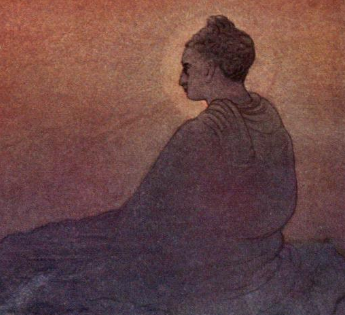
- What has been a reading which has given you peace on a reflective level because it conveys a sense of wholeness?
- What is wisdom for you?
- What is the meaning of learning that governs your life?
Type your e-mail address and click on subscribe to be notified of new content!
- Dewey
- Dewey Lee Más Libros
- One hundred unique stories in one hundred words
- Cien relatos irrepetibles de cien palabras
- Canciones del príncipe Vogelfrey
- Songs of Prince Vogelfrei
- A bestiary of prehistory
- Un bestiario de la prehistoria
- Los límites de mi lenguaje: Meditaciones sobre la depresión
- The limits of my language: Meditations on depression
Cambia el idioma a:



Which are the latest blog posts?