This book is a contemporary novel in Spanish literature.
Thus, it can be classified within the narrative genre in the form of a novel and subclassified into categories such as magical realism and rural fiction.
This is a sixteenth edition launched by the Anagrama publishing house in 2024, an independent Spanish book publisher founded in 1969. In their catalogue we can find hard-to-find 20th century classics, texts on significant political and cultural issues, as well as a series of publications, both narrative and essay, which they hope will be possible classics in the future. This book is available in English.
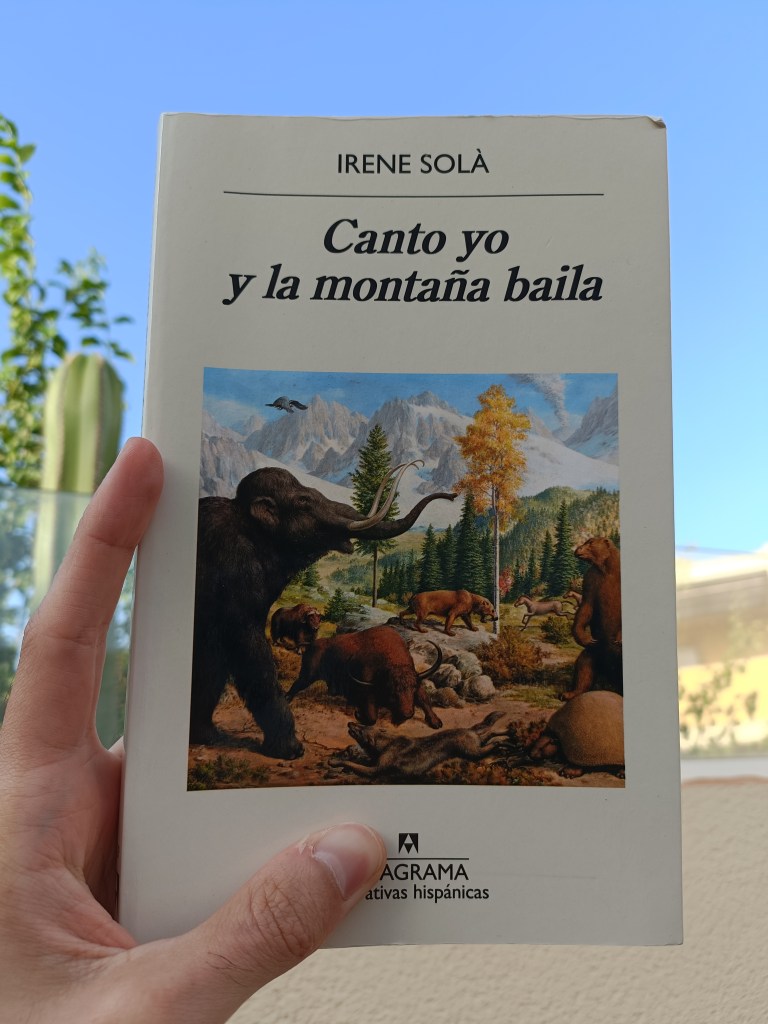
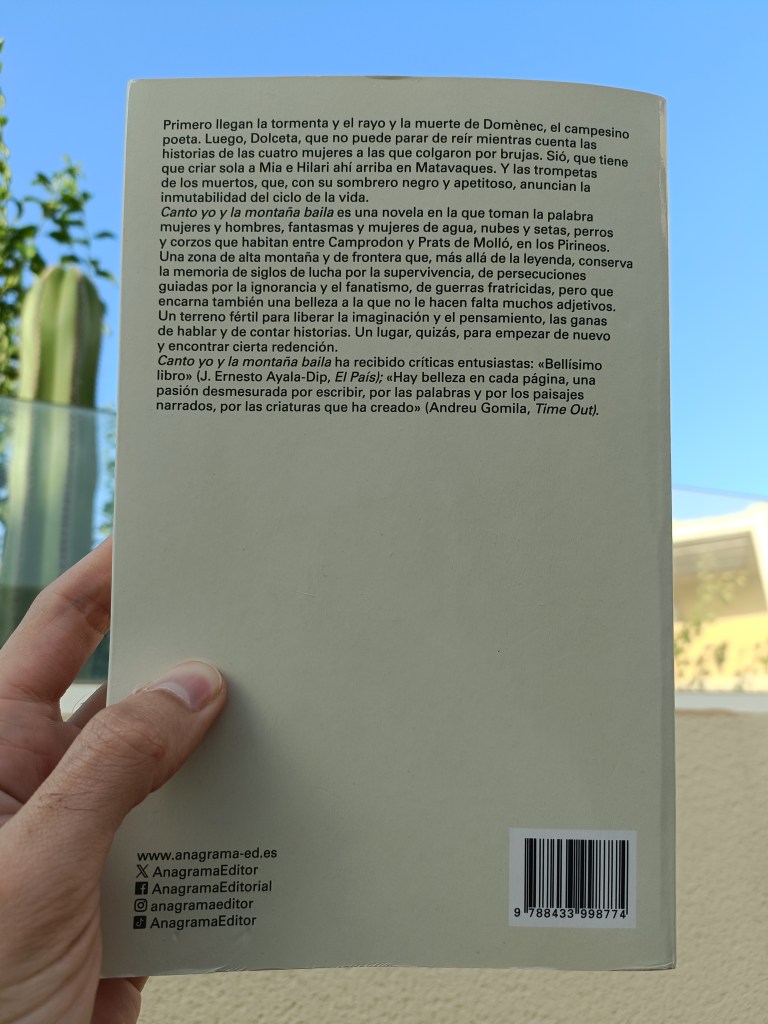
- Publication date: 2019
- Country: Spain
- Pages: 190
- Reading date: June 2024
- Rating: 5/5
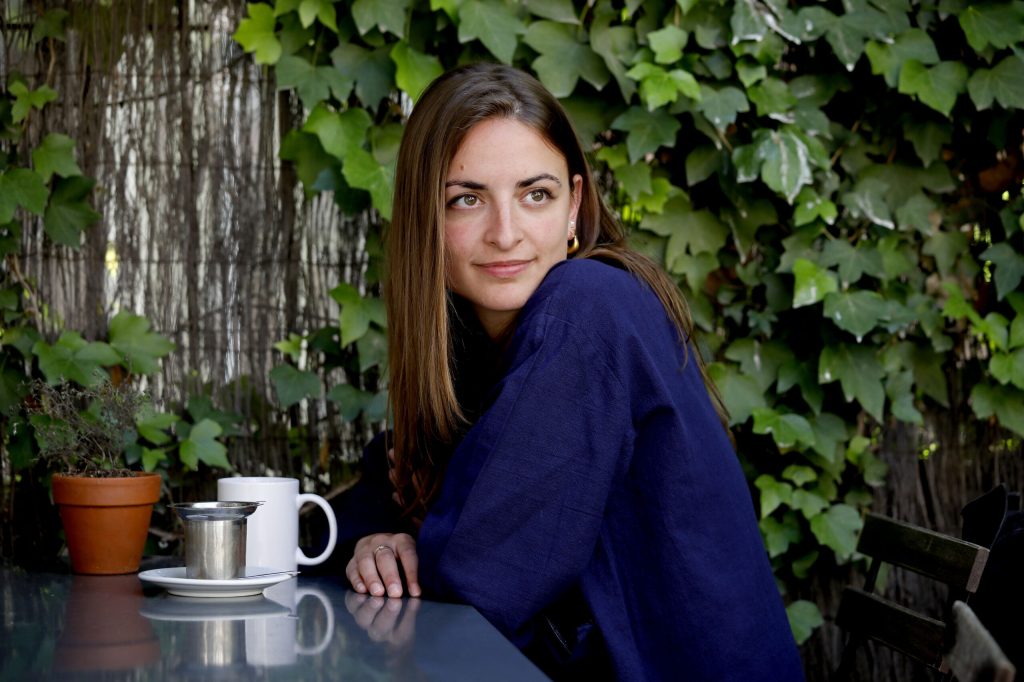
The author is Irene Solà Sáez (Malla, Spain, 1990-). She is a Catalan writer and visual artist. She studied Fine Arts at the University of Barcelona and did an MA in Literature, Film and Visual Culture at Goldsmiths College, University of London. From a young age she combined literary creation with her artistic training, producing works which connect different disciplines. She debuted as a writer with her collection of poems Beast in 2012 (Premi Amadeu Oller) and as a novelist with The docks in 2018 (Premi Documenta). Her international acclaim came with the novel reviewed in this entry, which won her numerous awards. In addition to his literary career, she maintains an active relationship with the contemporary art world.
Other books by Irene Solà are:
- Beast (2012)
- The docks (2018)
- I Gave You Eyes and You Looked towards Darkness (2023)
Within the list of other books published by the same author, those for which there is already a post in this blog are highlighted.
Click on it to read it!
I have a special fondness for this book as it was a gift from someone very dear to me. I had already seen When I sing, mountains dance in several bookshops and it had been recommended to me online, so I was quite curious about it. At the 2024 Madrid Book Fair, which takes place in June, I met up with a friend who was my internship tutor when I was doing my nursing degree in my final year back in 2020. I did my internship at the Fuencarral Mental Health Centre, and I learned a lot from her there. She has been a mentor to me. Little by little, a friendship developed as we kept in touch and met regularly when I went to Madrid from Zaragoza and once I moved to Cartagena. So, one of those meetings was at the aforementioned Book Fair. We both gave each other a book as a gift. She gave me this one and I gave her This Light in Oneself: True Meditation by Jiddu Krishnamurti. What I didn’t know was that this would be the last time I would see my friend, as she would pass away a few months later from a terminal illness. For this reason, I have a special fondness and love for this book because it reminds me of her. To you, my friend forever, I dedicate this review because I didn’t have time to tell you what I thought of the book you gave me.
«And who knows, maybe the shot will ring out now, and I’ll be thinking about habaneras, singing about sailors’ loves and salt water. It sounds like the bad things that happen in the world, which, if they don’t affect you, it’s as if they didn’t happen. Children. You’re just children. You have to carry a gun with the safety on. Damn it. Life, and the world, and history, and everything that happens are full of misfortunes that have happened at the wrong time, to people they shouldn’t have happened to, when there was no one there to prevent them!».
Neus
The plot of the novel takes place in the Catalan Pyrenees and begins with the death of a farmer named Domènec. From this starting point, a family story unfolds in which the death of this character has marked a life full of tragedy for the rest of his family and the relationships that bind them together. This plot unfolds over decades and is not always linear, as there are jumps in time and the narrative voices are varied.
«When Sió began to lose his mind, my husband said that sometimes, in order to survive, you have to bury your memories, but that those who have suffered greatly always bury them too deeply. Agustí thinks a lot about everyone’s story. He looks for the reason behind things. He analyses them. It’s his way of finding peace. Understanding what’s happening. But not everything can be understood».
Neus
The narrative is written in poetic prose, using everyday language that is very direct. I mentioned earlier that the narrative voices are varied, but I was not referring only to the human characters in the story, but also to multiple natural elements, animals and ghosts, resulting in a very polyphonic story. If you like the rural world and mythology, this novel may be the one for you, as it presents an anthropological perspective of human beings in connection with the natural world and traversed by it and by history. All of this is reinforced by the multiple rhetorical figures that appear in the work: personifications, anaphora, metaphors, synesthesia, symbolism, allegories… The musicality of the text is therefore quite remarkable.
«Poetry has it all. Poetry has beauty, purity, music, images, the spoken word, freedom, and the ability to move us and give us a glimpse of infinity. The beyond. The infinite that is neither on Earth nor in Heaven. The infinite within each of us. Like a window at the top of our heads that we didn’t know we had, and that the poet’s voice opens a little, and up there, through that crack, the infinite peeks out».
Narrator

The themes of the novel lie not only in tragedy and family life, but also in nature, historical memory, legends, pain and psychological trauma, guilt, redemption…
I must say that my favourite chapter was the one entitled Fear, as I think it is a good evocation of what psychological trauma means, and feelings of depression, guilt, emotional disconnection, but also redemption, warmth and hope. The following quotes from the book are from that chapter, narrated by Hilari.
«She says: I could be your mother. And she says: I’m not your mother. Separated by the things that happen in between. And deep down, all the things that don’t make sense make sense, and all the things that should make sense no longer do. Because if I had been 19 or 18, I don’t know, but I imagine she could be my mother. And because she never will be, she will never be my mother, even if she wanted to or I wanted to, but I don’t want to and neither does she. Sometimes I’m still the same as before. And other times I’m as if I had never been who I was before, as if everything had escaped through the hole in my head and all I had left was black fear and the things around my neck. And I can’t stop looking at the blackness of the eye that no longer sees or feeling dizzy, and thinking that I will never be who I was again, and thinking that they didn’t kill me, but they broke me forever. And to think that I have to die again, with the fear that dying brings, and that I wish I had died then so I wouldn’t have to do it again. And not learn fear. Because there are things you don’t want to learn, that you shouldn’t have to learn, and you learn them forever. And you can’t do anything anymore, you can’t want anything, you can’t feel anything with so much fear. You can’t go back to being the way you were before, because before you hadn’t learned fear. When fear takes hold, it’s the end. And then you have to take the pills and you have to sleep and start again the next day or the day after».
«Love also went down the drain. Maybe if I had loved Clara more. They would have shot me in the head and I would have woken up and loved her even more. But when I woke up, I didn’t want to love her. Clara cried at the foot of the bed when I told her I didn’t want to love her anymore, and then she left when my mother came back from the hospital cafeteria. And I know she sometimes calls her on the phone. And I appreciate her, but I don’t want to have to take care of her. I don’t mean protecting her from men who come into the house. I mean worrying about her. I mean asking her how her day was, I mean thinking about her and the things we’re going to do together. Now I want to be alone all the time. That’s why I liked the house, because it was an isolated house from which you can’t see anything else. We’re looking out over the valley and on the mountain opposite you can only see trees and meadows. The river flows at our feet and, if you stay silent, you can hear it passing by».
«And that visit was the most human, most constant, longest and most peaceful interaction I had, apart from my mother. Mia has the balance of embers, which calm you down, restore your desire to laugh, drink coffee, and look forward to summer or autumn, or whatever is coming. Her face is like a tree, with two eyes like two ladybirds, and her mouth, silent, and the peace she exudes until suddenly she lets out something sharp, as if there had been a fire inside her all along that I hadn’t seen».
Hilari
In conclusion, reading When I sing, mountains dance has been a very enjoyable experience. I have found it to be an original, polyphonic novel with multiple voices, connecting the mythical and the real, human beings and the natural landscape, profound, emotional and poetic. Perhaps there are readers who find the lyrical part confusing, who are baffled by the non-linear plot with multiple narrative voices, but I consider that to be a matter of taste in terms of reading comfort. Personally, I like poetic prose; in fact, I think it is the style in which I write, so I feel comfortable with it.
Thank you so much, my friend, for the book you gave me. I already told you when I visited you in Avilés, where you rest, but it never hurts to repeat how much you have meant to me and that I wish we had spent more time together. I will always remember you.
Some reflections:
- What is your relationship with nature? Do you perceive it more from a biological point of view and concepts, or more poetically and magically?
- Do you think that the environment also communicates, and not just humans?
- Tell me about a book that someone very dear to you recommended to you and that reminds you of that person.
Type your e-mail address and click on subscribe to be notified of new content!
- I overcame the anorexia
- Yo vencí la anorexia
- Pensando en ellos
- Thinking about them
- Saldremos de esta: Guía de salud mental para el entorno de la persona en crisis
- We will get over this: A mental health guide for the environment of the person in crisis
- Traces of Madness: A Graphic Memoir
- Desmesura: Una historia cotidiana de locura en la ciudad
- When I sing, mountains dance
- Canto yo y la montaña baila
Cambia el idioma a:



 arquerociego
Which are the latest blog posts?