This book is a contemporary autobiographical comic book in Spanish literature.
Thus, this book can be classified within the narrative genre in the form of comic or graphic novel and subclassified among those of an autobiographical nature.
This is the fourth edition published by Edicions Bellaterra, a Spanish publishing house founded in 1973 that specialises in popular works on social sciences. They state that their aim is to publish books which raise awareness of certain sectors of society and their problems in order to stimulate debate and sensitivity. This book is available in English.
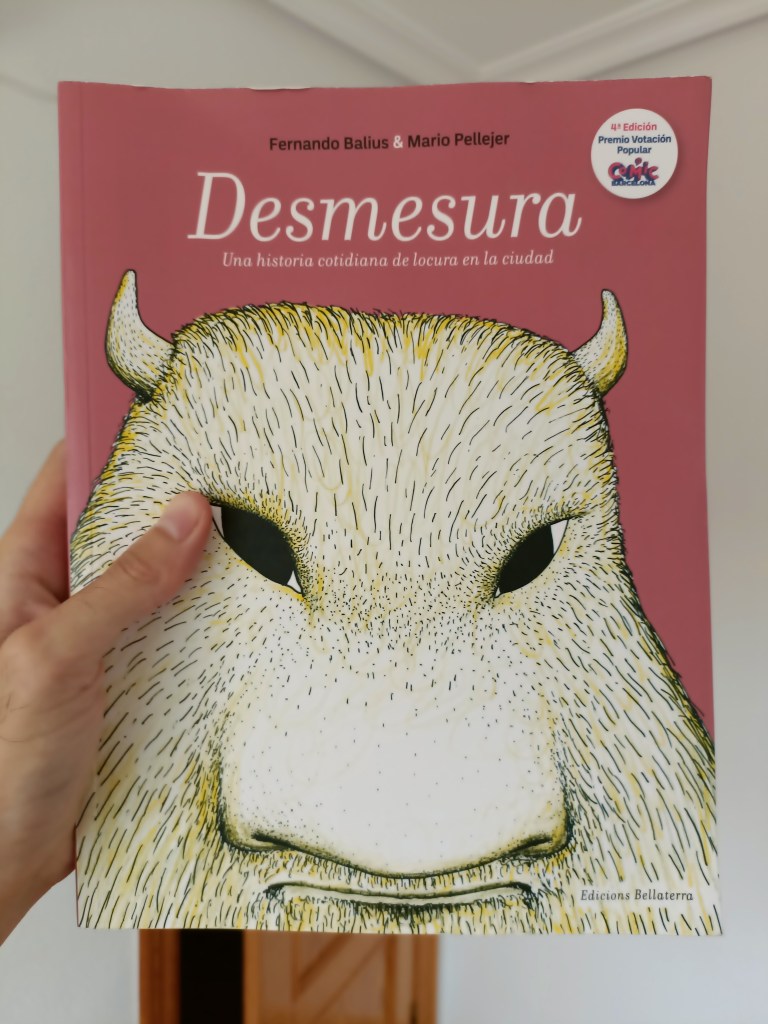
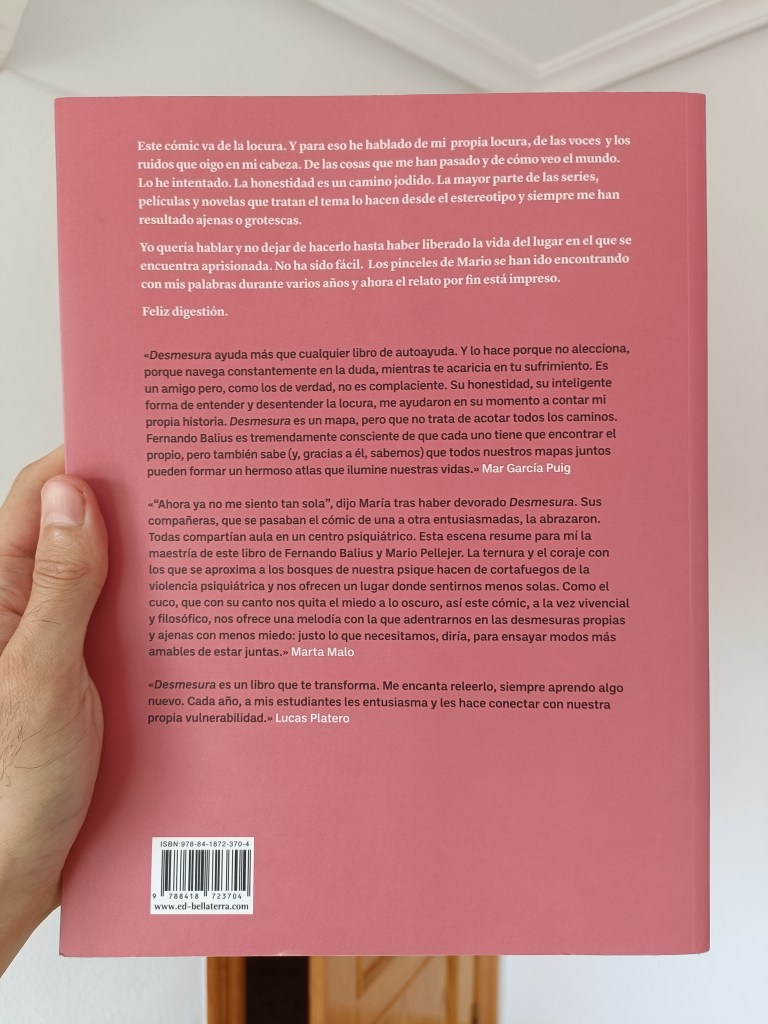
- Publication date: 2018
- Country: Spain
- Pages: 125
- Reading date: November 2023
- Rating: 4.5/5
The author Fernando Balius (Barcelona, Spain, 1961-) and the artist Mario Pellejer Ruiz (Murcia, Spain, 1980-) collaborated on this book. Fernando is a philosopher, former office worker and, in his own words, a precarious worker. He has published several articles in the digital magazine Ctxt and is a teacher specialising in mental health. Mario studied Fine Arts at the University of Granada and has worked on several artistic projects.

I met Fernando Balius in October 2023 in Valladolid. I attended a series of talks organised by Revolución Delirante, and he was one of the speakers. I was impressed by his philosophical yet approachable way of expressing himself. He identified himself as someone who suffered from mental illness and heard voices. He presented his book Traces of Madness, in which he recounted this experience in an autobiographical manner.
I bought his book after the talk and decided to read it the following month. I thought it would be a good read to reconnect with mental health after a sabbatical summer.
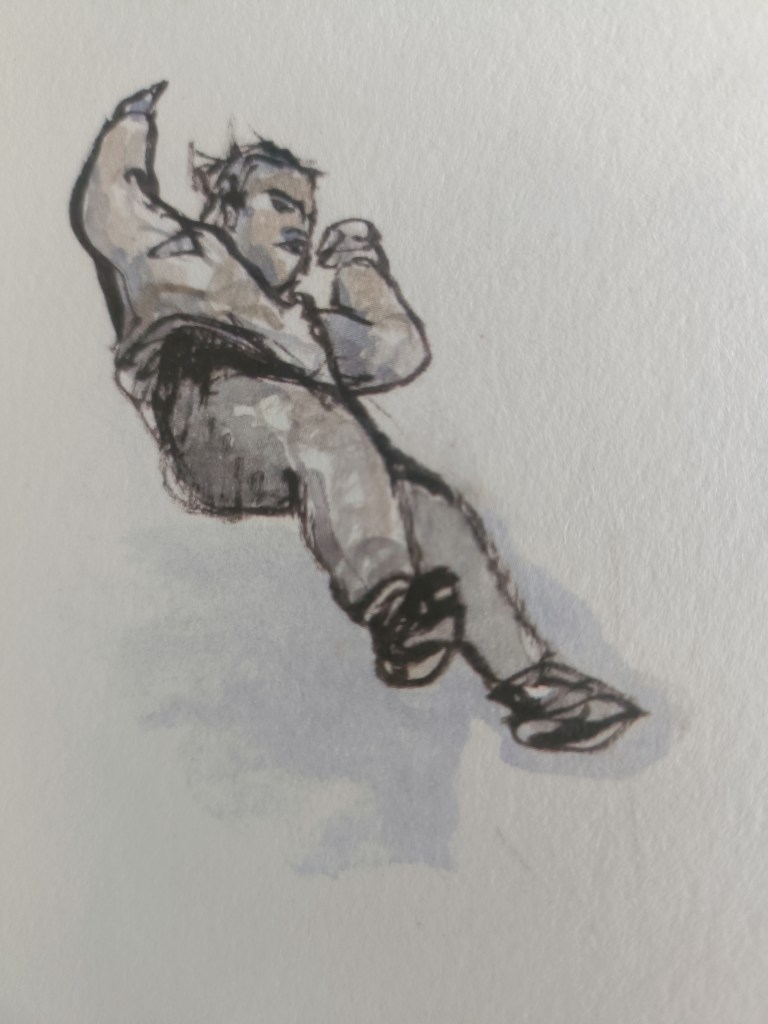
«There is no summit I can climb to flash a defiant smile from on high. This is not a story of individual achievement, it is part of a collective construction of meaning».
Fernando Balius
In his work, Fernando recounts his experience with mental suffering, particularly issues such as internal voices, crises, diagnostic labels, different treatments, and the search for meaning in what was happening to him. This experiential narrative does not follow a linear structure, but rather the author shows us different inner states of episodes, events, doubts, questions, setbacks, relationships, etc. Thus, it is not a story of individual overcoming, but rather a narrative of individual experiences situated in a context linked to others.
«Finally, you have to put all that into words. To heal, so that it doesn’t come out in another way. By naming what I have experienced, what I am experiencing and what I feel, I change the way I relate to my voices. I get closer to everything I carry inside me, the things that men and women in white coats will never be able to talk about. It is no longer necessary to hurt yourself to talk about pain. Comparing yourself to others is no longer a means of trying to find out who you are. If I try to take stock (albeit precariously) of my heritage, I think I have understood that this whole long struggle has been nothing more than an accumulation of disobedience, a slow and meticulous training in the art of saying “no”. In the midst of confusion, each refusal (which by definition is something intimate, a personal decision) transcends me and has an impact on my surroundings. Every time I manage to disobey one of my voices, I become a little stronger. Just a little. Enough. I have lost much of my impatience. Resistance is fertile and must be given time. Resignation, on the other hand, offers the immediacy of what is already dead. Challenging one’s own voluntary servitude and killing the judge within is a lofty and exquisite act. It means regaining the control that has so often been taken away. It even puts you in a position to anticipate the emergence of the most aggressive voices. The barriers of the impossible fall…».
«I do not accept any closed paradigm, any categorical interpretation. Nothing that resembles a diagnosis or a sentence. The human mind is too complex to be confined to an instruction manual. I dedicate myself to searching, clearing the way and advancing slowly. There is no map. Or rather, there is, but it is drawn as you walk, and therefore it will always be unfinished».
Fernando Balius
Some of the moments that appear in the book are the first signs of mental distress, confusion, diagnoses, the worst crises, coping strategies, reflections on medication, support from social ties, picking oneself up and finding a way to be in the world and live with these experiences…
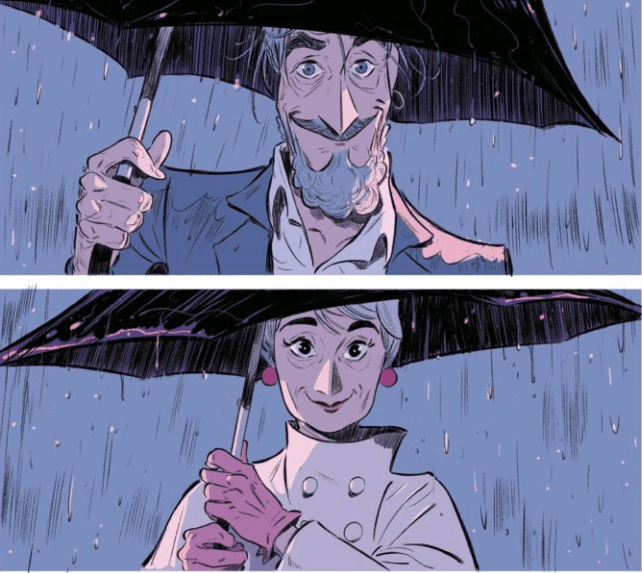
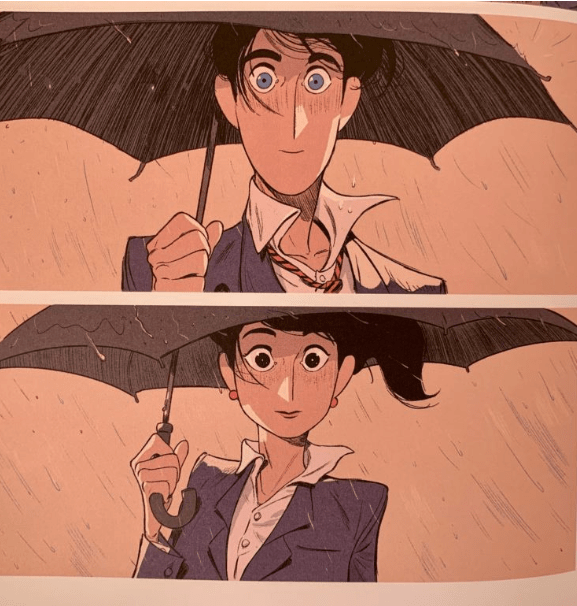
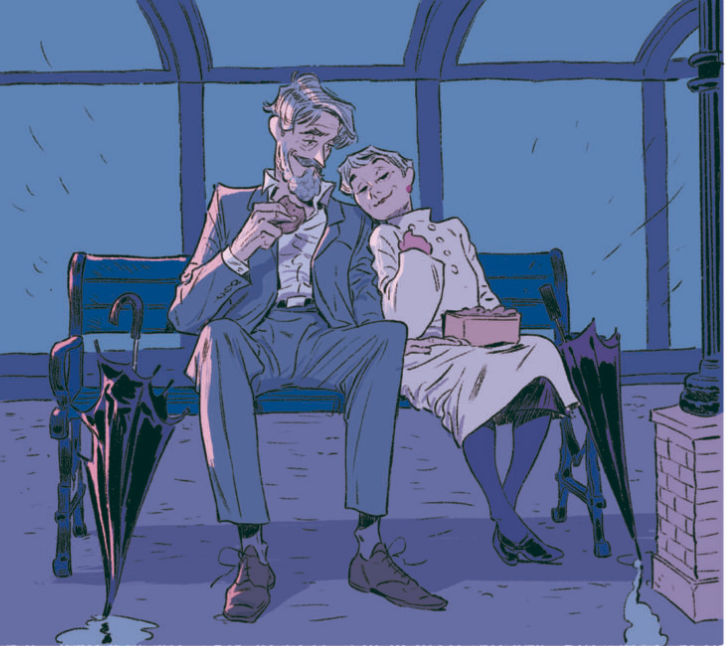
Although these are all real experiences, not everything is narrated realistically. The author uses symbolic passages where he plays with images and empty spaces that convey emotional states rather than referring to external events. Thus, blank spaces that draw the reader in contrast with denser, more chaotic pages. Moments of acceleration (mental breakdown, psychotic crises, intense episodes of voices) create a sense of vertigo, while moments of pause feature more visual silence, sparse dialogue and larger vignettes. In this way, the narrative rhythm is rather oscillating, with moments of dizzying emotional evocation, more essayistic moments and moments of calm and silence.
«I left the doctor’s office with a secret, a sentence, and a wad of prescriptions for psychiatric drugs in my pocket. Something about that scene didn’t quite add up. I felt a sense of unease that went beyond the bad news I had just received. The interview with that middle-aged woman with the weary look had ended too abruptly. A heavy metal door had closed behind me. Click! The die was cast. You go in feeling a mixture of fear and confusion, and you come out a madman with all your papers in order».
«Madness can be something almost indefinable, and yet it refers us to a pain, to a place we do not know, but from which one can enter and leave… Mental illness is something else, a firm belief that in some irremediable way — even though it cannot be objectively specified — I am broken and there is nothing I can do about it. Only wait for the end».
Fernando Balius
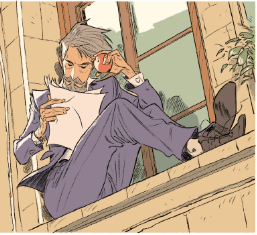
Among the aspects I liked most about the book were the author’s honesty and how he vulnerably shares his experiences in a relatable way, as well as how he treats «madness» as something complex, seeking to move away from stereotypes. I also liked the visual language that accompanies the text to convey emotional states. Furthermore, unlike other works, it is not limited to being an introspective and individual narrative, but seeks to frame itself within a collective perspective on mental health, giving it therapeutic and educational value. The use of humour also allows for self-criticism, which softens the narrative at certain points.
«Humour sabotages unhealthy ways of relating to the world».
«Sutures allow wounds that would otherwise remain open to be closed, leaving the body exposed and unable to heal. The stitches pierce the flesh with precision so that it does not open. The needle sews both sides of the wound so that it can heal. Isn’t there something beautiful in that? Detecting those points and showing them allows us to avoid falling into the loop. It is because of them… that we move forward».
Fernando Balius
On the other hand, it should be clarified that its subjective value, apart from giving it strength, also constitutes a limitation. This means that it cannot cover or represent all the variants of experiencing psychological suffering. Nor does it claim to do so, and that is what I like about the book. It does not claim to be a manual or to be instructive. Although this is how I interpret it, I believe that, like other works of the same style, for some readers it may convey a certain romanticisation or inspirational character, something like the idea of “the mad hero” or “elevated suffering”. However, in my opinion, I think that the book does not seek to do this and simply tries to be poetic in some aspects.
«However, having been wounded in the processes of social selection cannot become an excuse for being condescending towards oneself. The legitimacy of the victim excludes the possibility of victimhood. I try to ward off that risk by thinking of myself as a survivor. As I deviate from the dominant narratives, I have no choice but to construct alternative stories».
Fernando Balius
In conclusion, Fernando Balius’s Traces of Madness has educational, social and therapeutic value. It is a fragmented, unpretentious narrative about a way of living and coexisting with mental illness. The accompanying illustrations make reading it a very personal and emotional experience. It is a book that allows us to get closer to the world of someone who suffers in this way and to their coping strategies with humanity and honesty. The language of the book allows the author to convey his experiences and reflections, while exploring himself and giving the work an unfinished feel. The emphasis on social bonds and humour is very important, as is the social criticism of the more biological approach to Psychiatry.
«The truly awful thing is not losing your mind, but having no one around when you try to get it back».
Fernando Balius
Some reflections:
- Do you think that reading testimonials from people with mental health issues can help you gain a more realistic perspective, rather than just reading clinical books?
- Do you think art can help evoke certain states of mind that words alone cannot reach? Has this ever happened to you?
- Are you familiar with the term “situated knowledge”? What do you understand by it? Would you consider this book to be an example of it?
Type your e-mail address and click on subscribe to be notified of new content!
- I overcame the anorexia
- Yo vencí la anorexia
- Pensando en ellos
- Thinking about them
- Saldremos de esta: Guía de salud mental para el entorno de la persona en crisis
- We will get over this: A mental health guide for the environment of the person in crisis
- Traces of Madness: A Graphic Memoir
- Desmesura: Una historia cotidiana de locura en la ciudad
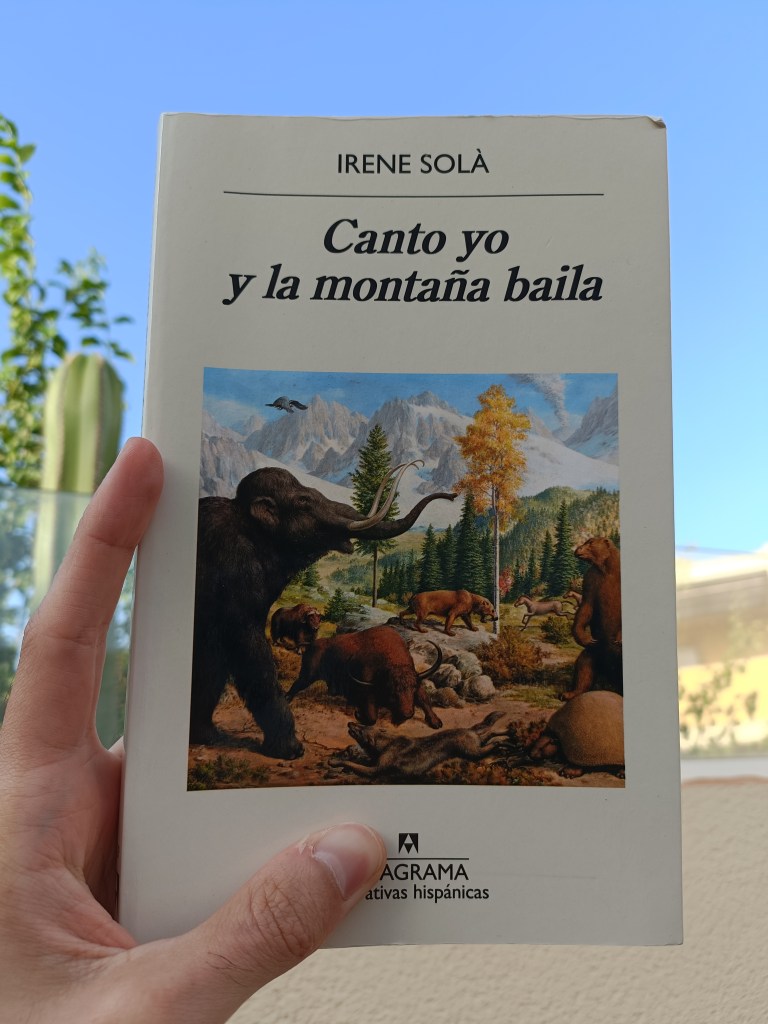
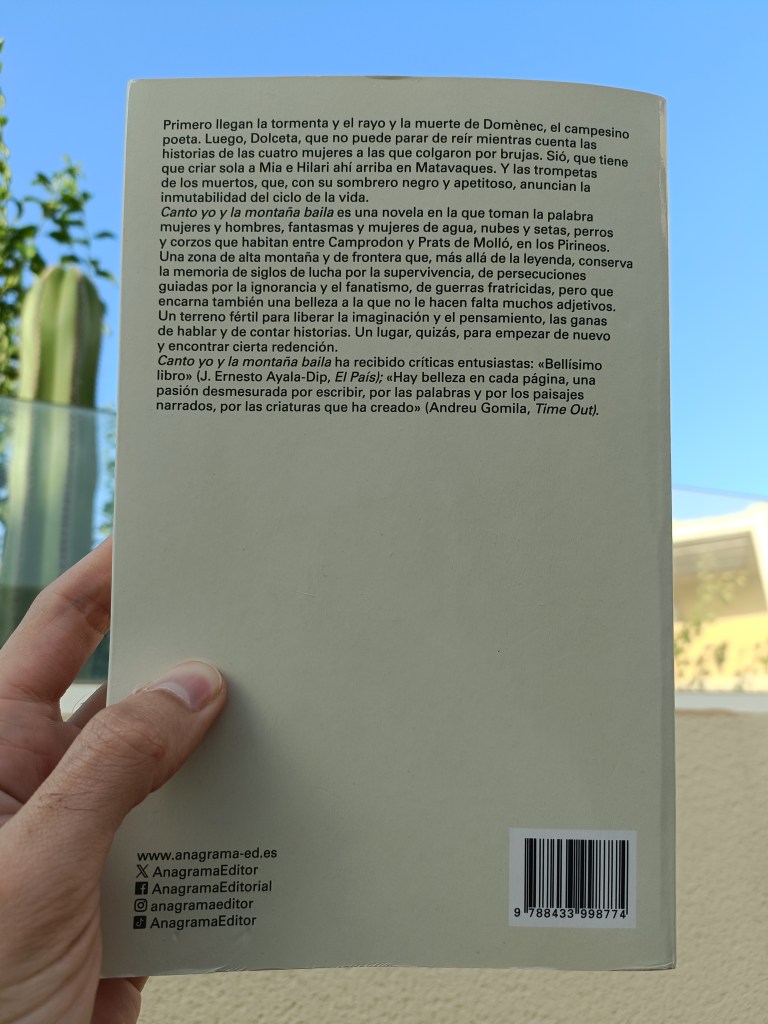
- When I sing, mountains dance
- Canto yo y la montaña baila
Cambia el idioma a:









 arquerociego
Which are the latest blog posts?