Stroke-by-stroke meditation
This book is an introduction to the art of Zentangle in the form of a didactic guide.
Thus, it can be classified within the didactic genre as a guide or handbook and subclassified among those in the field of Art.
This is a first edition released by the Spanish language division of Penguin Random House, one of the world’s leading international English language publishers founded in 1927. This book has not been translated into English.
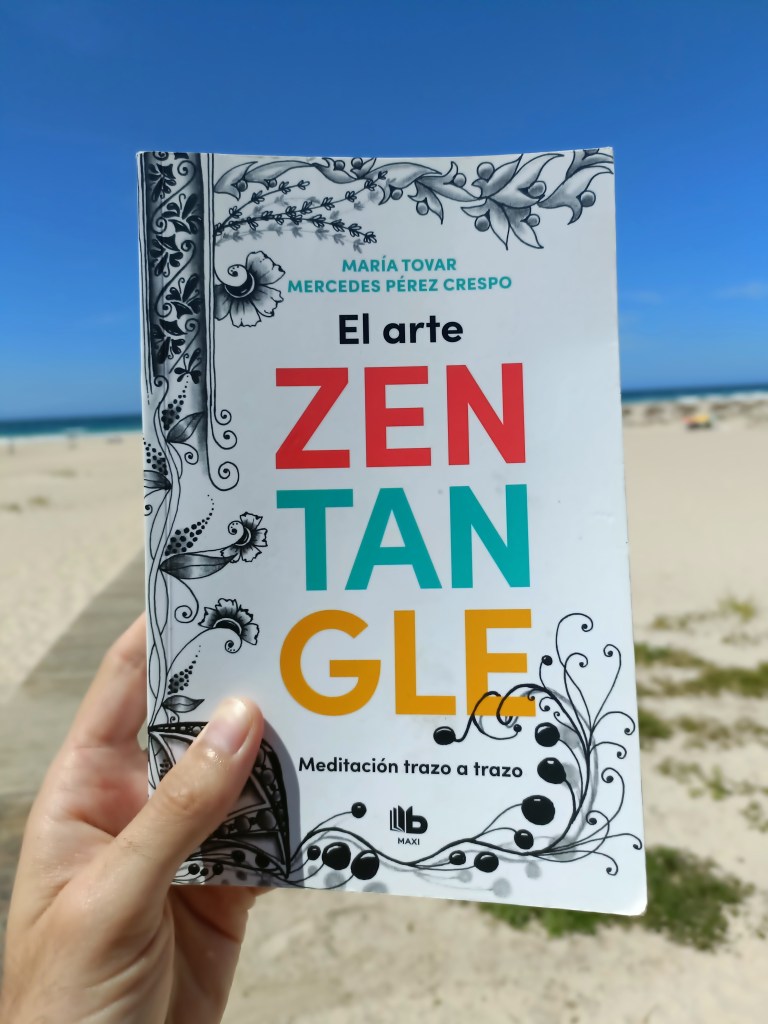
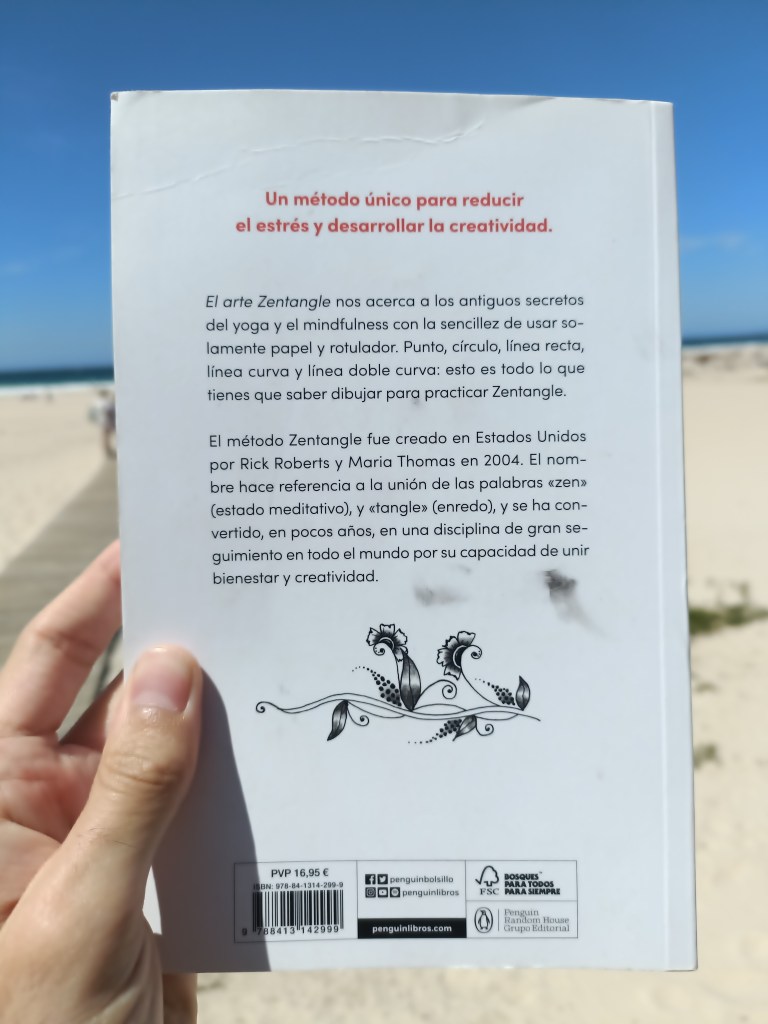
- Publication date: 2021
- Country: Spain
- Pages: 296
- Reading date: November 2021
- Rating: 4/5
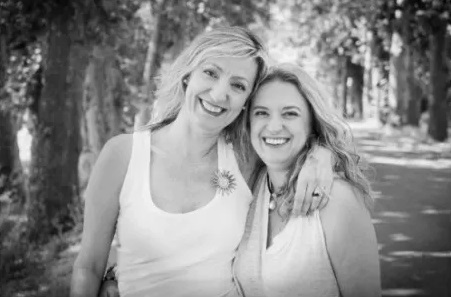
María Tovar (Madrid, Spain, 1963-) (right in photo) and Mercedes Pérez Crespo (Madrid, Spain, 1966-) (left in photo) are both authors of this book. On the one hand María attended Business Studies and as an art enthusiast she obtained the title of Zentangle teacher and opened the first Zentangle school in Spain (El último tangle). She has also been trained in Mindfulness and stress reduction techniques. Mercedes, on the other hand, has a degree in Advertising and Public Relations. Once she started collaborating with Maria in El último tangle, she was also trained in Mindfulness and stress reduction techniques and qualified as a Zentangle teacher. Mercedes helped to bring a more therapeutic approach to this practice, motivated in large part by her diagnosis of fibromyalgia and chronic fatigue syndrome.
The first time I knew about the Zentangle method was in the 3rd year of my Nursing degree. I don’t remember if it was María, Mercedes, or both, who came to introduce it to the students of the Mental Health Nursing subject. In the seminar they gave us a brief theoretical talk about the Zentangle method, we did a practical part and then we commented on how we had felt during it and with its result. It was a very participative seminar in which I felt a lot of interest. I keep as a fond memory my paper with the drawing I made during the practical part of it.
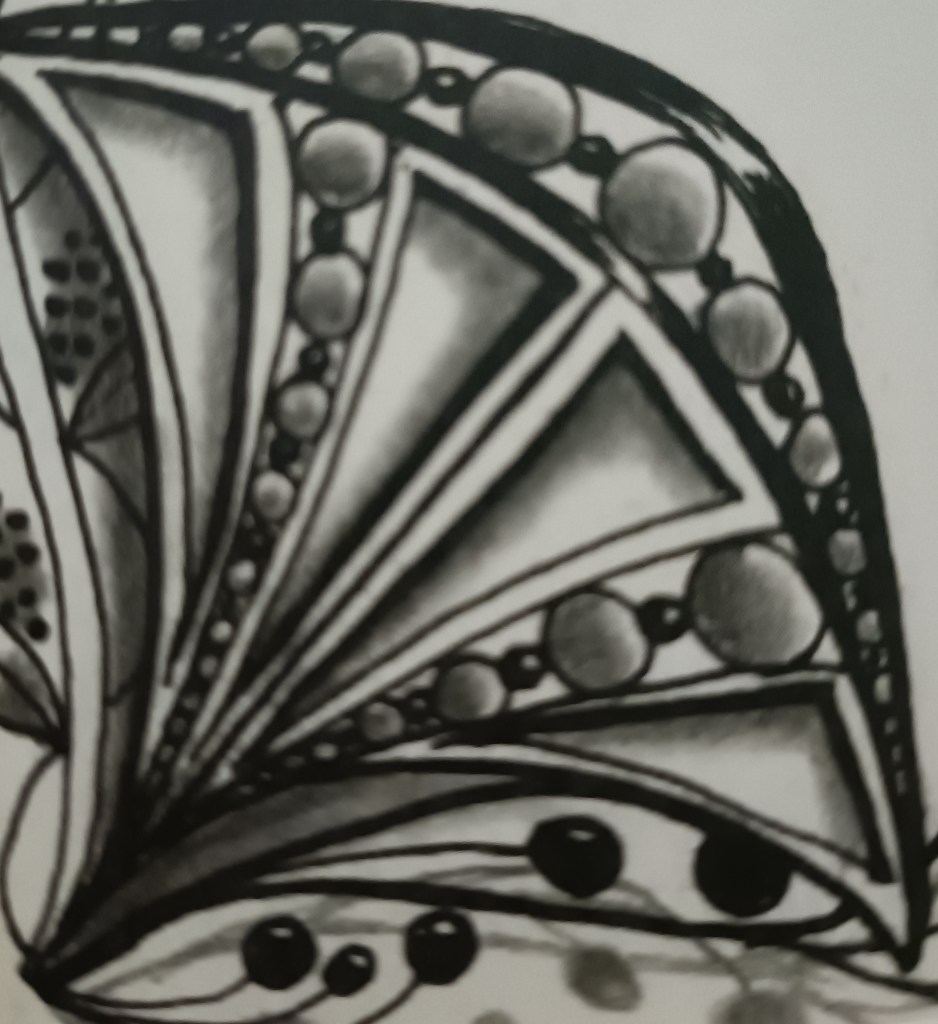
«»Zentangle» comes from the combination of the words «zen», which means meditation, and «tangle», which in English refers more to a challenge than to a cumbersome mess».
María Tovar and Mercedes Pérez Crespo
Although they are the authors of this book, neither Maria nor Mercedes are the creators of the Zentangle method, but they are the ones who have given it the greatest diffusion in Spain. The creators are Maria Thomas and Rick Roberts, both from the USA. Maria is a watercolourist and calligrapher, while Rick was a Buddhist monk and has dedicated a large part of his life to meditation and yoga. They conceived the Zentangle method in 2003 as the result of a chance event in which they saw great meditative potential. Since then it has been expanding. But what is Zentangle?
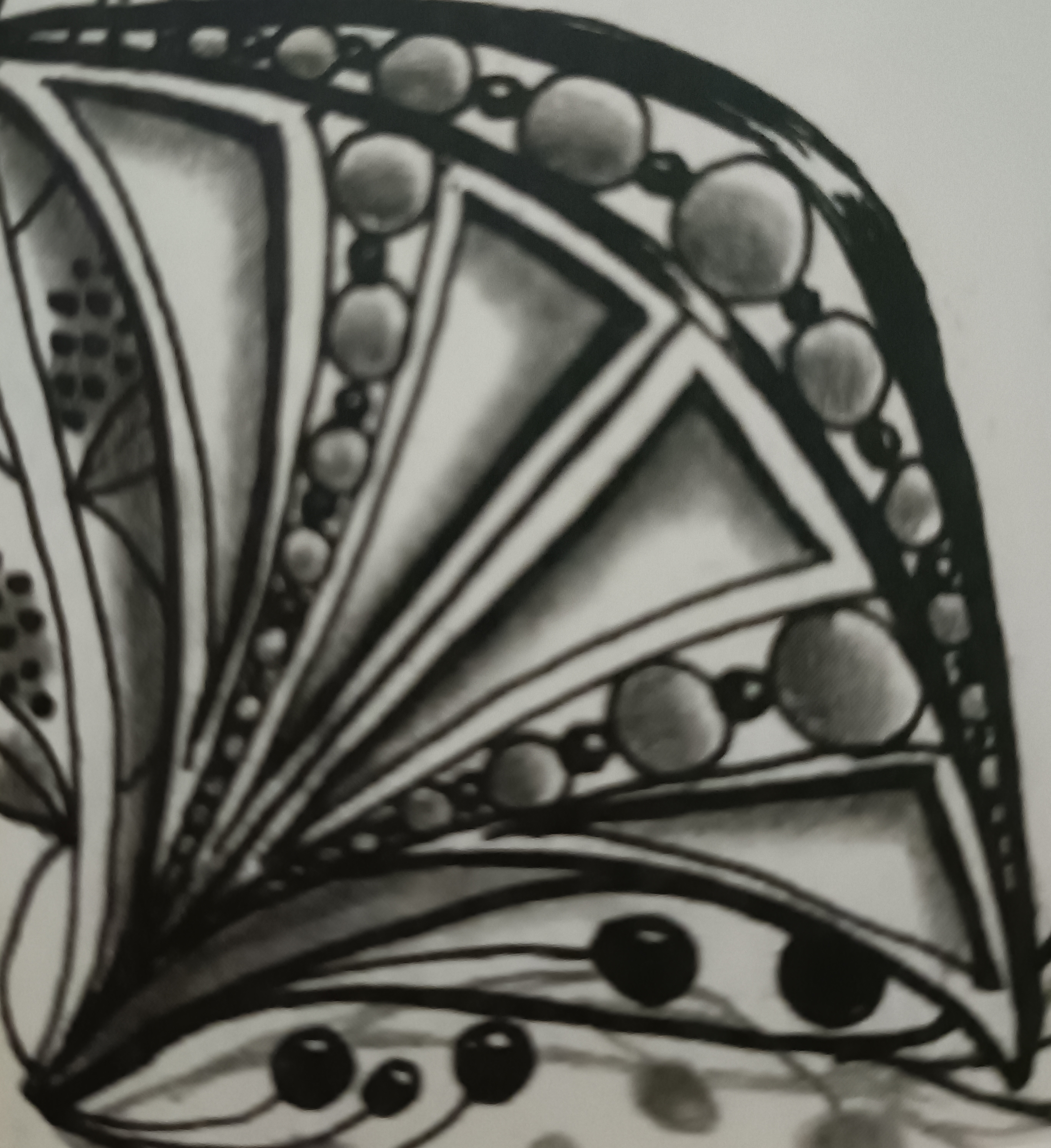
Zentangle is defined as a method of relaxation based on the repeated drawing of simple strokes in a specific sequence to create patterns which stand out for their great beauty.
«There is a similar technique, doodling, which is what people tell us they do when talking on the phone or while listening to a lecture. There is a fundamental difference between the two techniques and that is attention. When we doodle, our attention is on the conversation or lecture (or at least it should be). In the Zentangle method, our attention must be on the strokes we are making because, otherwise, we will not form the pattern we want; we will create another one, probably beautiful too, but our mind will still be far away from the paper and we will not have abstracted from our recurrent thoughts».
María Tovar and Mercedes Pérez Crespo
I’ve been following El último tangle on the social networks since that seminar they gave us at the university and that’s how I found out about the publication of this book. Reading it has been very rewarding. I also read it shortly after I started my training in Mental Health as an Internal Nurse Resident (EIR) and this has helped me to be able to intuit its benefit for mental health patients.
It is a very complete book if you want to know what the Zentangle method consists of. Both the artistic and meditative sides of it are explained very well, as well as its basic principles, history, steps, materials and benefits, which are mental, psychological and social, as well as artistic and creative. There is a second part of the book in which different creations, patterns (tangles) of various Zentangle teachers are shown in order to appreciate the great diversity and breadth of this graphic mindfulness method.
«Tangles are patterns that we create step by step; they don’t have to look like anything. It is an abstract art».
«In the Zentangle method we go step by step, concentrating on the line we are making at that very moment. The line we made before is in the past and no longer matters to us; it doesn’t matter if it came out as we expected or not. And the line we are going to make next is in the future, we can’t worry about it yet either».
María Tovar and Mercedes Pérez Crespo
The language of the book, being a didactic guide and a presentation of the art of Zentangle, is simple, without technicalities. It is not only aimed at social and healthcare professionals or education ones who want to apply it in different areas, but at anyone who wants to know what this method is all about.
Having practised it myself in a seminar at university, I have been able to experience this art at first hand. I have seen and read about its therapeutic potential for concentration and attention, as well as its help in dealing with stress and anxiety. Therefore, I have come to the point of wishing to be trained as a Zentangle teacher to learn how to apply it in my work as a Mental Health nurse. I find it very useful for people who are not comfortable doing relaxation techniques based on muscle contraction/relaxation, body awareness, visualisations, breathing and so on. I think it may be of great interest to those with traits of perfectionism, rigidity and obsessiveness.
«Living is much more than fulfilling all the expectations that life puts in front of us in an almost infinite way. Nor should we do everything with the highest level of self-demand we are capable of. That will only turn us into permanently dissatisfied beings who judge ourselves and others for not reaching that chimerical perfection».
María Tovar and Mercedes Pérez Crespo
In conclusion, after reading this guide I have been able to better understand this art and I find it a great help to anyone who is interested in diving into Zentangle. I’m sorry I can’t tell you about my work experience doing this method with patients, because to teach it you have to be a certified teacher, and in the future I will be able to talk more about it on a personal level, but for now that’s what I’ll tell you.
Some reflections:
- Do you consider that everyone can make art and be creative?
- What is creativity for you?
- Does it attract your attention or do you do any artistic discipline which helps you to find peace?
Type your e-mail address and click on subscribe to be notified of new content!
- Dewey
- Dewey Lee Más Libros
- One hundred unique stories in one hundred words
- Cien relatos irrepetibles de cien palabras
- Canciones del príncipe Vogelfrey
- Songs of Prince Vogelfrei
- A bestiary of prehistory
- Un bestiario de la prehistoria
- Los límites de mi lenguaje: Meditaciones sobre la depresión
- The limits of my language: Meditations on depression
Cambia el idioma a:


Which are the latest blog posts?