This self-conclusive book is a tribute to the work of Junji Ito, in commemoration of his 30 years in the profession. It brings together interviews, brief analyses of his works, biographical aspects of the author and his working methods, etc…
This book can therefore be classified within the didactic genre in the form of a memoir and subclassified among those in the form of a tribute.
This is a second edition released by ECC Ediciones in 2021, which is an independent Spanish publisher which has been publishing and distributing comics and mangas in Spanish since 2012. This book is not translated into English.
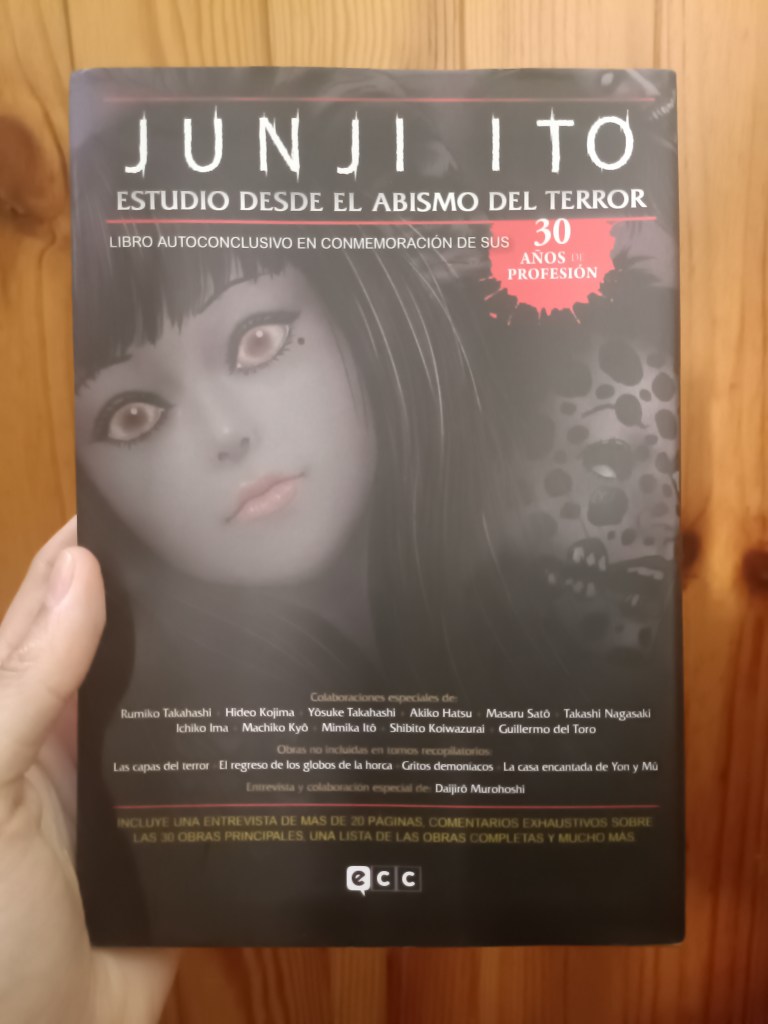
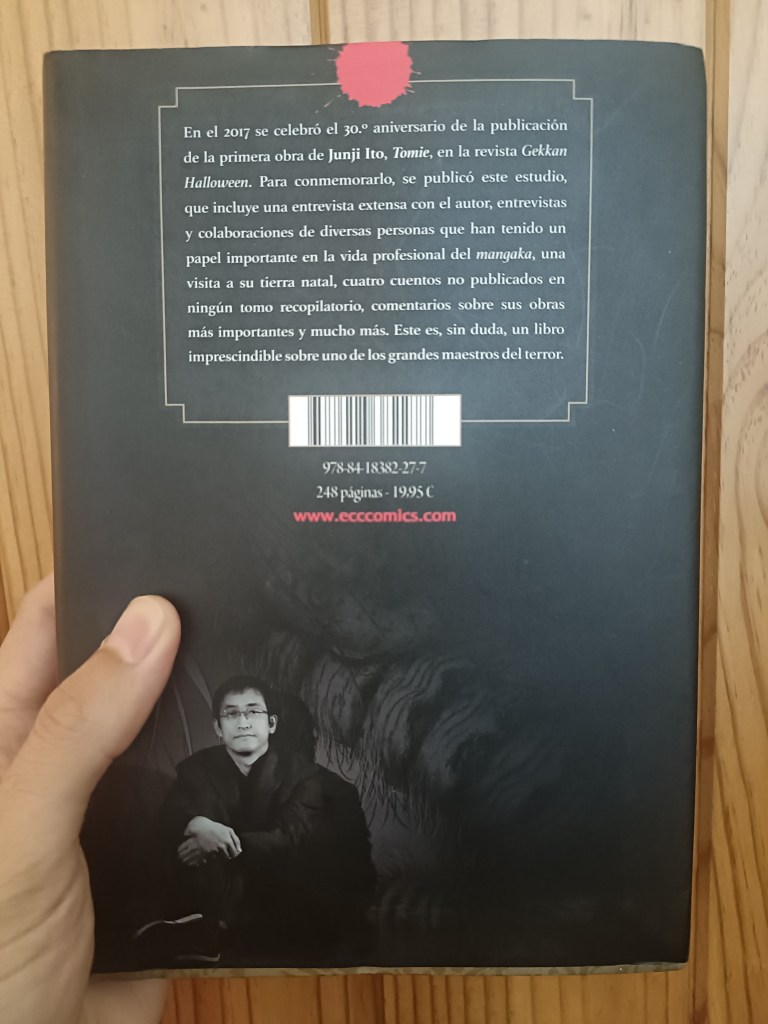
- Publication date: 2017
- Country: Japan
- Pages: 248
- Reading date: February 2022
- Rating: 4/5
As it is a commemorative book, a wide range of content related to Junji Ito’s life and work has been integrated in its writing. Therefore, it has not been a tribute book written by a single author but by the joint effort of many people. In the following I will detail what is contained in this tribute to one of the masters of the contemporary horror genre.
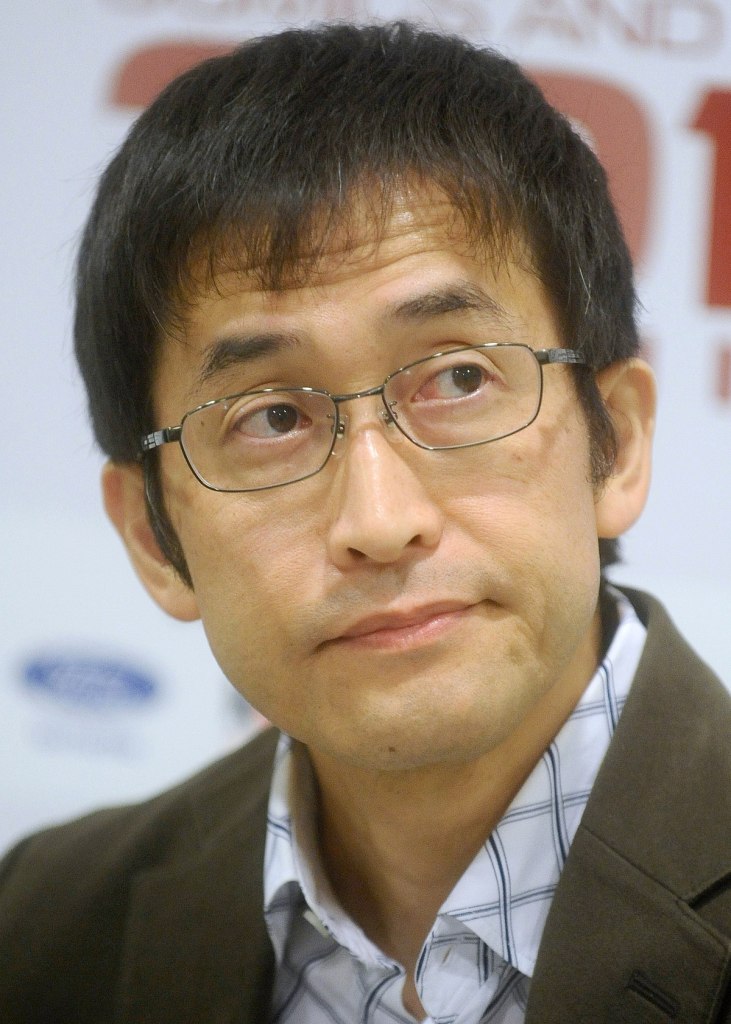
It was in 2019 when I was first told about Junji Ito, known as the master of contemporary horror manga. I was introduced to him by one of my best friends during a holiday I spent in Italy in the summer of that year. It caught my attention from the very first moment. The truth is that I hadn’t read any horror literature at that time and I still haven’t delved deeply enough into the genre, but I knew right away that I wanted to read all his works and see all his creations. I found his drawing style extravagant, his vignettes disgusted me as much as they fascinated me.
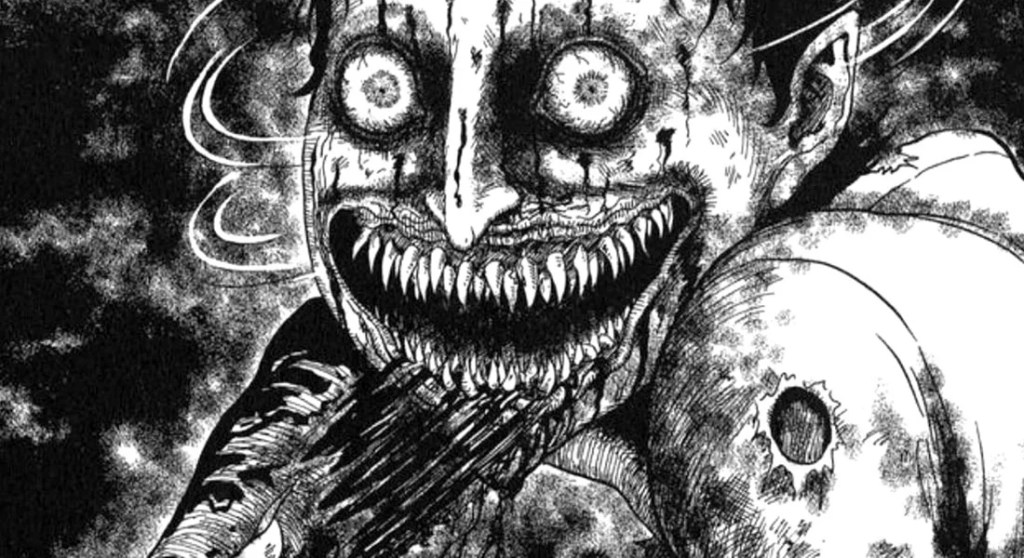
«I was convinced that I drew fast, but Urasawa told me I was the slowest of all the mangakas (laughs). I thought maybe it was because, in my case, I draw a line with short strokes. Those who handle the pen quickly draw a long line in one go, but I’m incapable of that. I seem to draw as if I were making an engraving with short lines».
Junji Ito
So I started to read several of his manga between 2020 and 2021, which I’ll be reviewing on the blog little by little. Finally, after soaking up his horror genre, I wanted to delve deeper and see if I could find a book which analysed his style and creations.
That’s when I found this book. It is a tribute, a commemoration to the author Junji Ito for the anniversary of his 30 years of profession, which he reached in 2017, the date on which this work is published in Japan. I thank the Spanish publisher ECC Ediciones for bringing it to Spain in an edition translated into Spanish, as it is a complete and interesting tribute to read.
«There were already many extraordinary authors working in the field of vengeful ghosts and the subjugation of evil spirits, so I didn’t really feel like drawing ghosts. I think spectres have the image of being something that «can’t be touched» and I felt I wanted to draw the physical fear of «something anomalous that is definitely there and can be touched». And if my style tends more towards science fiction than psychological horror, I think it’s because I had the image that the psychological was very elevated. Besides, there were also other authors who specialised in the psychological. So, I’m a bit twisted (laughs)».
Junji Ito
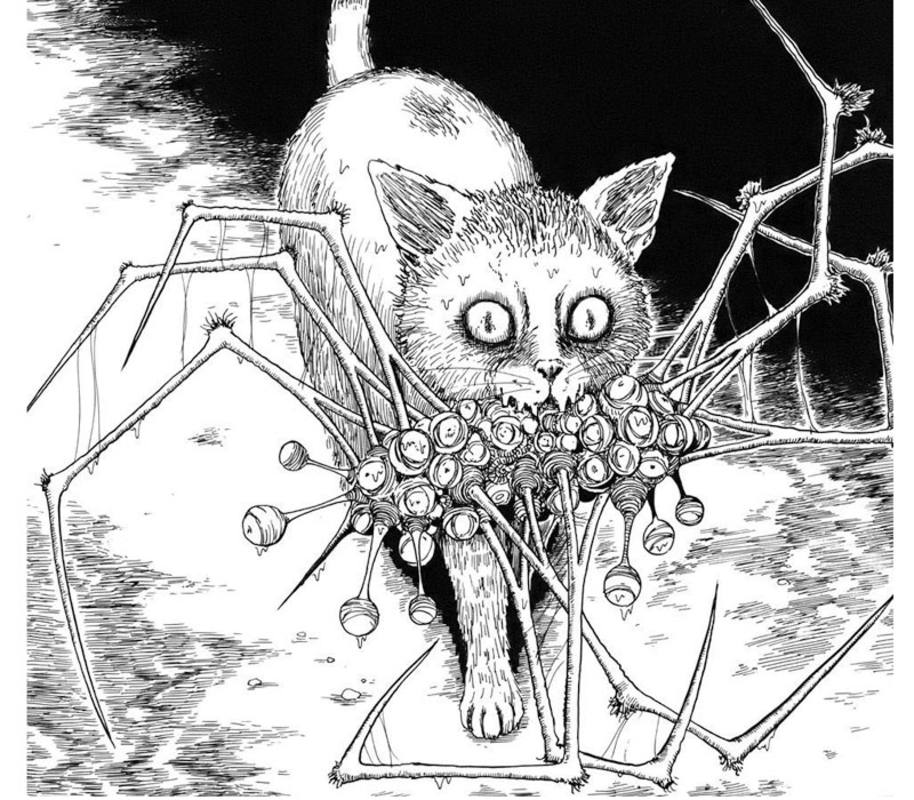
Why do I say it is a rather broad, comprehensive tribute? Because of the variety of content shared in the writing of the text. The book has vignettes and art by the author, interviews, testimonies of special collaborators who knew Junji Ito, dialogues between the author and other mangakas and analyses of his horror universe from a literary critical point of view. It also has a description of Junji Ito’s studio and workspace, biographical aspects, the impact of his creations in Japan and internationally, works by the author not included in other publications and detailed comments on the main ones. Of course, the list of his works goes up to 2017, the date of publication of this tribute.
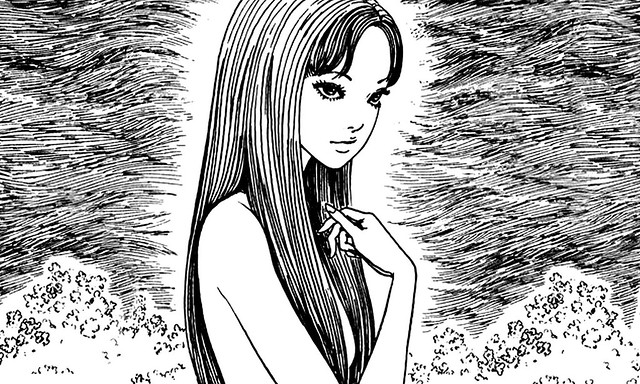
«I think that for a man to engage in unusual behaviour, to do something he wouldn’t normally do, he needs a motive such as the force of love or an attraction that is like a drug. If he were serene, he would certainly not approach something dangerous, and when he does, his story evolves into a horror story. That’s why I draw fascinating people or things that alter the ability of the characters in the book to judge calmly».
Junji Ito
As you can see, it is a great job of writing this book with a very good result in my opinion. I was surprised not to find an English edition for this reason.
After reading it, I can say that there have been aspects of the author that I didn’t know and which have surprised me about his way of being. His stories are very disturbing and his art is highly uncomfortable. However, in interviews he seems like a pretty normal guy. One might expect a different, eccentric, dark personality after seeing or reading his works, but he is not like that, or at least he doesn’t show it. So, being able to go deeper into Junji Ito’s life and reflections as this commemorative book allows has pleased me a lot.
«He is a typical person who is satisfied with his real life. But what he draws is weird. I think he’s a bit, just a bit, crazy. I like people like that. Morohoshi is the same. When you talk about geniuses and strange men, you imagine people who talk and act eccentrically and have a unique appearance, but that’s not the case. Both Ito and Morohoshi are well-mannered, serious and methodical gentlemen. But they are odd. And theirs is a perfect oddity. A perfect weirdness and a sympathetic madness».
«To begin with, horror manga is made up of the «introduction, development, twist and denouement» structure, i.e. the basis of drama, as represented by the works of Kazuo Umezu. In Ito’s works, however, there is an intriguing introduction that draws the reader in, and then the development, twist and denouement are totally unpredictable».
Yôsuke Takahashi y Takashi Nagasaki
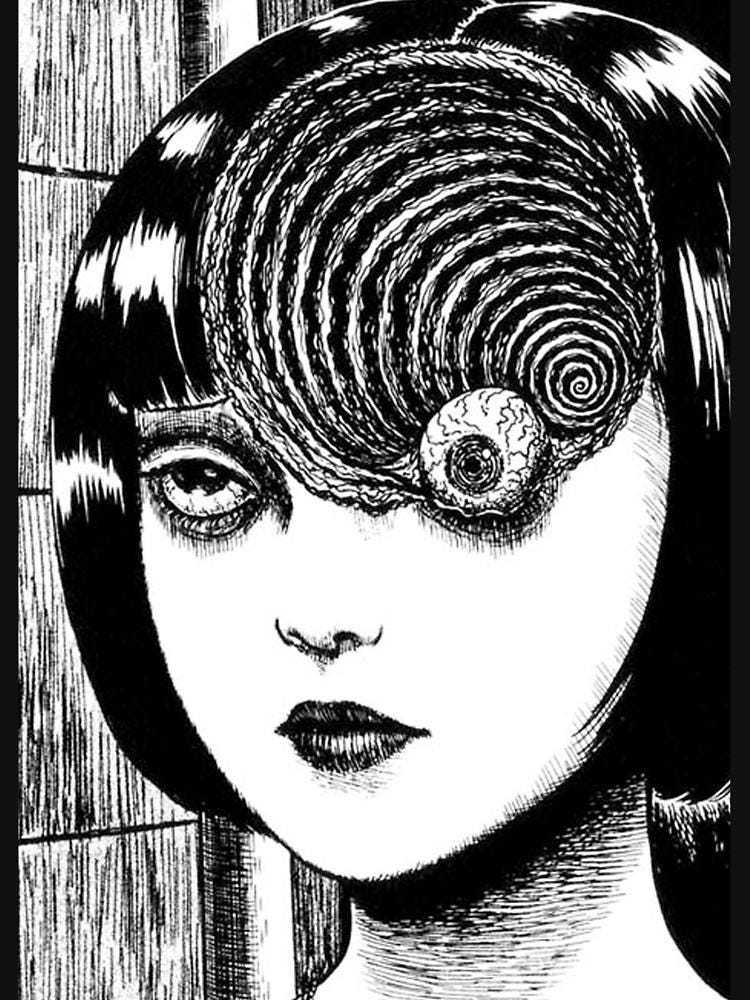
On the other hand, enjoying the truly original reflections on fear and horror has made the reading experience of this tribute even more complete. In addition, the analysis of some of his works or characters is highly recommended in order to reread his stories and better understand the horror genre used by the author and the disturbance he seeks in the readers’ minds.
In conclusion, this tribute has helped me to better understand Junji Ito’s work, delving into his life, his way of working and his ideas and comments on his creations. Therefore, I think it is a highly recommended book if you have already read something by the author and would like to understand him better or if you are curious to know more about him.
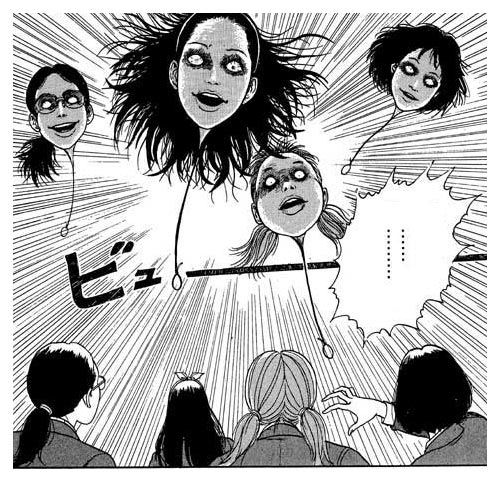
«For a long time, I have been thinking to myself that my own existence frightens me. I am terrified of the idea of a doppelgänger or of ‘having seen my other self’. I was always terrified when I thought, «What am I? So I felt that there was nothing creepier than a balloon with your own face on it coming to attack you. In the Oshikiri series I also deal with the theme of the «other self», and in the Tomie series, Tomie reproduces herself and «many selves» are born. The Tomies see each other as enemies and, in the end, the idea is that for Tomie «she is her own biggest threat». In Lovesick dead I also deal with the theme of the doppelgänger, a theme which interests me a lot. Lately it doesn’t happen to me any more, but looking in a mirror used to scare me too. Kazuo Umezu drew on this fear in Kagami (The Mirror), and Oscar Wilde, in his novel The Picture of Dorian Gray, also dealt with the theme of the «other self» in the form of the aging self-portrait instead of the real person. So it seems to me that this is a theme that provokes an ancestral fear of man».
Junji Ito
Some reflections:
- What relationship do you find between disgust and horror?
- What scares you the most: listening to a horror story, watching it (either on video or drawing) or reading it in a textbook?
- What do you think of Junji Ito’s talent, is he as revolutionary as he is described or is he more of a fad?
Type your e-mail address and click on subscribe to be notified of new content!
- I overcame the anorexia
- Yo vencí la anorexia
- Pensando en ellos
- Thinking about them
- Saldremos de esta: Guía de salud mental para el entorno de la persona en crisis
- We will get over this: A mental health guide for the environment of the person in crisis
- Traces of Madness: A Graphic Memoir
- Desmesura: Una historia cotidiana de locura en la ciudad
- When I sing, mountains dance
- Canto yo y la montaña baila
Cambia el idioma a:

 arquerociego
Which are the latest blog posts?